Electronic and live formats shape the experience, while rules, bonus conditions and evidence limits affect what can be assessed.
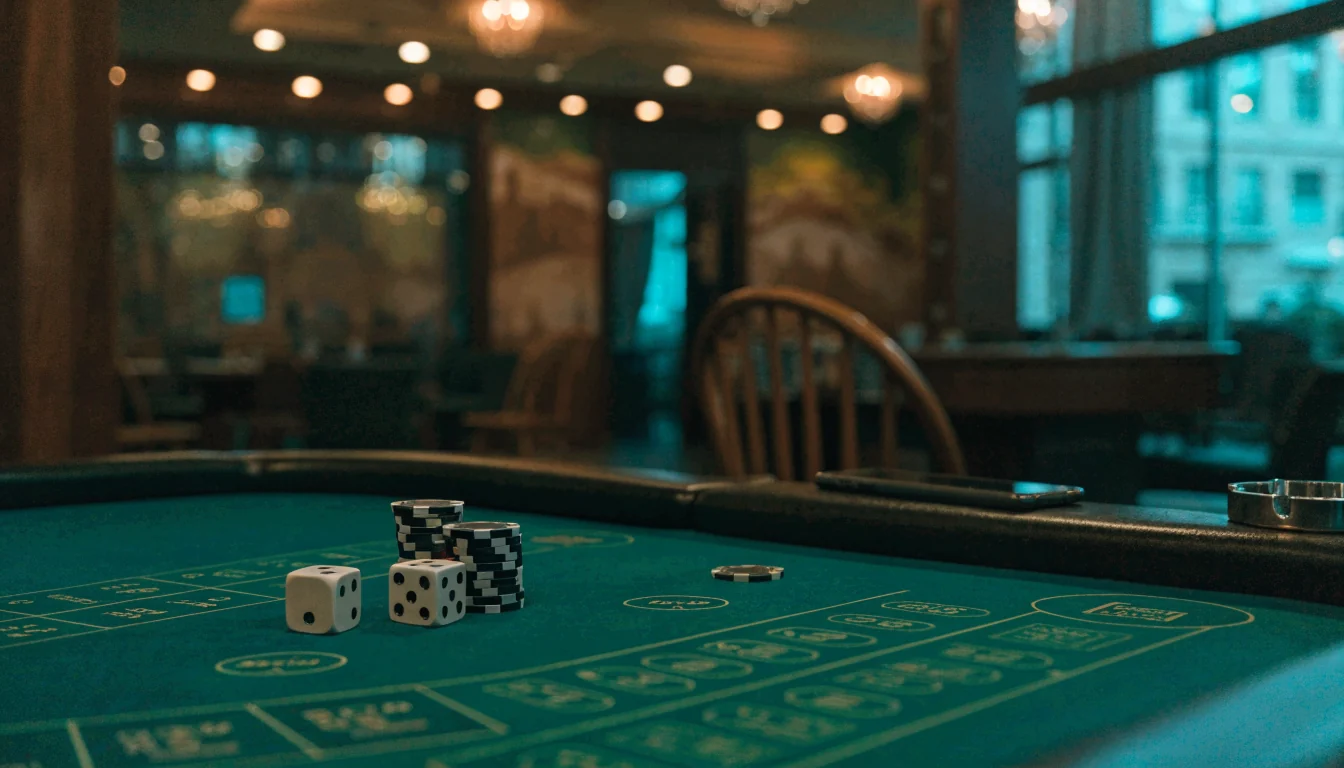
Electronic craps names a way of encountering the game through a digital interface rather than through a live dealer and a room of other players. That distinction sounds straightforward; in practice, it changes the atmosphere before it changes anything else. The table is no longer a shared physical place. It becomes a screen, and the player’s attention settles on what that screen chooses to present.
There is no need to imagine a particular machine, display or set of controls to understand the format. Electronic versions can differ, and the label alone does not establish what a casino offers or how its version works. It is safer to treat the term as a broad description of digitally mediated play, not as a promise of a standard experience. The interface matters, but its details must be checked where the game is actually presented.
That makes electronic play distinct from a live table even when both carry the name craps. A live dealer supplies a human presence and a visible event unfolding in real time. An electronic setting removes that particular social layer. The experience is more private, less governed by the expressions and rhythms of a group. It does not follow that every electronic game is quiet, fast, simple or solitary in precisely the same way; those are qualities of individual products, not guarantees contained in the word “electronic.”
Choosing an online craps casino from Australia calls for checking the available operator information rather than relying on broad promises. This list highlights the specific licensing, deposit, and payout details provided for each option.
WinSpirit Casino
WinSpirit Casino lists a Curacao eGaming OGL license issued through Antillephone N.V. Its minimum deposit is A$30.
Ricky Casino
Ricky Casino lists crypto payouts in under an hour and PayID payouts in 1–3 business days. The minimum deposit is A$20, or A$30 to qualify for the bonus.
Uptown Pokies
Uptown Pokies operates under a Curacao license and has been operating since 2017. Its minimum deposit is A$20.
Lucky Dreams
Lucky Dreams lists a Curacao license and a A$20 minimum deposit when using POLi.
JustCasino
JustCasino lists a license from the Curacao Gaming Control Board. That licensing information is the key stated detail for this listing.
SkyCrown
SkyCrown lists a Tobique Gaming Commission license, with crypto payouts taking about 10–15 minutes and fiat payouts taking 1–5 days. Its minimum deposit is A$30.
Roby Casino
Roby Casino lists a Curacao eGaming license held by Roby Games Ltd. This is the main stated detail about the operator.
Golden Pokies
Golden Pokies lists a Curacao license. No deposit or payout details are provided here.
Bizzo Casino
Bizzo Casino lists a Curacao Gaming Control Board license, with TechSolutions Group N.V. named in connection with it.
Thor Casino
Thor Casino lists a Curacao license through Antillephone N.V., with Versus Odds B.V. named in connection with it. Its minimum deposit is EUR 20.
The absence of a crowd can make the game feel less ceremonial. At a physical table, other people’s attention gives each turn a small audience, whether welcome or not. Online, that public quality may recede. The player is less exposed to the moods of strangers, but also loses the incidental human cues that make a table feel like a place rather than a sequence of decisions. Convenience has a social cost, even when that cost is modest.
There is a cultural difference here, too. Casino games have long depended on more than rules: they gather people around ritual, anticipation and the spectacle of chance. A digital version can carry the name and broad identity of a familiar game while changing the setting in which that identity is felt. The screen does not need to reproduce a casino floor to make the game recognisable. Nor does recognisability prove that every feature of a physical table has been carried across.
For someone comparing online craps casinos, the useful question is therefore not whether electronic play is automatically better than a live table. It is what kind of encounter the format offers, and what the operator’s own description actually confirms. The distinction is between a digitally presented game and a game mediated by a live human host; beyond that, assumptions about pace, controls, visuals or available versions can quickly outrun what the label supports.
This restraint matters in a market where a familiar game name can make an unfamiliar product seem self-explanatory. “Electronic craps” may sound like a complete specification. It is not. The title tells something about the medium, but little about the particular experience. A casino’s game page and terms are the place to establish what is being offered, rather than relying on a generic description to fill in the gaps.
 GameBeat Online Casinos in Australia: Bonus TermsLearn how GameBeat slot wagers count toward casino bonus requirements, alongside mobile play, offshore context and what free-play searches can confirm.
 Playtech Online Casinos in Australia: Legal RealityLearn why Playtech branding does not mean local licensing, how the Interactive Gambling Act 2001 treats casino services, and what to check…
So the appeal of electronic craps is best understood as a shift in setting: less table-side company, more distance between the player and the room that once gave the game its theatre. For some, that distance is the point. For others, it removes much of what made the table compelling. The format changes the company, not necessarily the character of the game.
Live casino craps is defined less by a screen’s graphics than by the human presence at its centre. A dealer gives the game a visible host: someone whose work turns a sequence of wagers and outcomes into an event with a pace, a face and, potentially, an audience. The screen remains a barrier, but it is also a small stage.
That changes the character of online play. A purely digital table can feel like a private exchange between a person and a system. A live-dealer table suggests a room beyond the screen, even when the player is alone at home. The dealer’s presence offers a point of attention; the proceedings seem to happen somewhere, rather than simply appearing on demand. This is not the same as being in a crowded casino. It is a thinner kind of company, but company nonetheless.
Craps has a particular relationship with spectatorship. Its public image is bound up with people watching the same table, reacting to the same moment and making a shared occasion of chance. That image can travel online, though a live stream cannot reproduce the physical crowd or the social obligations of a room. No stranger needs to make space, and no one’s mood has to be managed across a rail. The theatre survives in miniature. The audience may be a handful of names on a screen, or no visible audience at all; the human dealer remains the central figure.
 New online casino sites in Australia: what to knowExplore what “new” means in Australia’s offshore casino market, why acceptance is not local licensing, and how Curaçao registration fits the picture.
 Relax Gaming Online Casinos in Australia: Bonus TermsUnderstand wagering arithmetic, offshore context and the limits of available evidence; one review reports common bonus requirements of 30x to 45x.
The difference matters because a live table is not merely a visual treatment. It is a social framing device. A dealer’s presence can make play feel less solitary, while also reminding the player that the experience is being staged and managed by an operator. There is a person on screen, but the relationship is not the same as conversation across a physical table. The format creates proximity without intimacy. A neat modern compromise.
For anyone comparing live craps casinos, the useful distinction is therefore not a promise of atmosphere, but the kind of atmosphere being offered. A streamed dealer provides human presence; that alone does not establish how interactive a particular table is, whether other participants are visible, or what games a given site carries. Those details depend on the individual service and its terms. The label “live” should not be asked to do more work than it can.
There is also a practical difference when bonuses enter the picture. Live-table play contributes less toward wagering requirements than slots, and live-dealer games often receive a contribution in the 0–10% range. The percentage, if any, is set by the promotion’s terms; a bonus balance can therefore move much more slowly at a live table than a player might expect from the advertised wagering total alone. A session that feels active is not necessarily making equal progress toward clearing a promotion.
This is where the social appeal meets the operator’s accounting. Slots generally count fully toward wagering requirements, while live tables may count only in part. A low contribution can leave most of a live wager irrelevant to the bonus target, and an excluded game may count for nothing. The headline offer is only one part of the arrangement; the game-weighting clause determines how much the chosen format participates.
That qualification need not diminish the appeal of live play. It simply separates two different reasons for choosing it: the presence of a dealer and the progress of a bonus are not the same measure. One belongs to the experience; the other belongs to the terms. The small print keeps its own seat at the table.
Bonus Contribution
Live-dealer games often contribute significantly less toward wagering requirements than slots, typically falling in the 0–10% range.
Craps is often described as a game about dice, but a round is also a small piece of public theatre. One person takes the role of shooter; others gather around the same uncertain event, each with a stake in what the dice produce. The movement is simple to picture: attention settles on the shooter, a roll interrupts the pause, and the table turns towards whatever comes next.
That description is not a rulebook. The exact sequence, permitted bets and consequences of a result depend on the game’s rules. A useful first impression is instead that play is organised around successive rolls, with the shooter physically or virtually setting the dice in motion and the other participants making their own choices about the round. The shooter supplies the action; the table supplies its many separate interests.
In a casino, those roles are visible. The shooter is the person handling the dice, while other players follow the same round from their positions at the table. Their bets need not express identical expectations. A shared roll can therefore hold several private calculations at once. Some participants may be waiting for a particular outcome; others may be concerned with how the current state affects a choice they have already made. The group watches together, but it is not a single player.
Online, the physical gesture may be mediated by a screen, yet the basic idea remains recognisable: a round advances through rolls, and participants engage with the outcomes according to the game’s rules. That is enough to distinguish the rhythm from a game in which each player simply takes an isolated turn. Craps makes the roll feel collective, even when the wagers and reasons for making them are individual.
The order of events matters because a bet is not just a prediction detached from time. Its meaning comes from when it is made and what has happened in the round. For anyone learning how casino craps works, the first task is to understand that a roll belongs to an unfolding sequence, not to a collection of unrelated dice results. The same result can have a different significance depending on the rules and the point the round has reached.
That is why learning to play is less a matter of memorising a slogan about lucky numbers than of following the table’s state. The shooter rolls; the outcome is read under the game’s rules; the round either continues or reaches a point at which play changes or ends. That outline leaves the detailed mechanics to the rules of the particular game, but it gives a newcomer a map of the action without pretending every table runs identically.
There is also a social division between the person who throws and everyone else. The shooter has a visible task, but does not thereby control the other players’ decisions. Around the table, attention can rise and fall together while each person remains responsible for their own wager. A roll may draw a cheer, a groan or silence; none of those reactions changes what the dice have done. The ritual is communal. The exposure is personal.
Online players can follow the same broad progression without standing shoulder to shoulder. What matters is being able to see when a round begins, how its state develops, and when the rules say it is complete. Before placing a wager, the governing instructions need to be clear: otherwise, even a familiar-looking sequence can be misunderstood. No shortcut replaces that. The dice keep moving.
Free play changes the question being asked. A practice version, where one exists, lets someone encounter a casino game without staking money; real-money play places the same pastime inside a financial arrangement, with deposits, withdrawals and conditions attached. Those are not interchangeable experiences. Nor does the existence of one establish the availability of the other.
For craps, the distinction matters because the label “free” can describe different things: a no-cost demonstration, a promotional credit, or a game that looks familiar but is tied to an account. Without a clearly identified offering and its terms, none should be assumed to be available. A search for a free online craps table may bring the idea into view, but the phrase itself does not prove that a particular casino provides one, or explain what happens when play stops being free.
Practice has its own modest value. It can make an unfamiliar interface less forbidding and show how a digital game presents decisions. It cannot, by itself, establish what a real-money version pays, whether its rules match another version, or whether a bonus applies. Free casino craps, if offered, is therefore not a reliable stand-in for every detail of paid play. The boundary is not theatrical; it is financial.
Odds searches ask for something more exact. “Best odds” sounds like a stable ranking, as though every table could be placed on one shelf and compared by a single figure. But a meaningful comparison depends on the precise game, its rules and the bets being considered. A number detached from those particulars is decoration, not guidance. No general figure can responsibly describe casino craps odds across unidentified tables, and no ranking can be trusted without evidence tied to the actual version.
This is where the language of certainty does its most useful work for sellers. “Best odds” is concise, persuasive and incomplete. A credible claim would need to show what is being measured and where the relevant information can be checked. Without that, even a precise-looking number leaves the central question unanswered: odds on which game, under which conditions? Precision without a subject is only costume.
The same care applies to claims about the best online casino for craps in Australia. A name beside a game title does not establish that the game is available, that it can be played for free, or that its odds have been independently demonstrated. Those are separate claims. Combining them into one confident recommendation may sound efficient, but it conceals the gaps between availability, practice play and mathematical comparison.
There is a social difference, too. Free play can make a casino game feel like a harmless puzzle, while real-money play turns each decision into a potential cost. That shift is easy to blur in a polished interface, where the same screen can frame amusement and expenditure as neighbouring moods. The table may look unchanged. The stakes are not.
Attention: A free practice version cannot be used to verify real-money payouts, specific game rules, or the applicability of bonuses.
For anyone trying to assess craps, the sensible standard is plain: a free option needs to be described as a free option, and an odds claim needs to be attached to a specific game and supported by particulars. Otherwise, the most honest account is not a list of supposedly superior casinos or a convenient figure. It is the recognition that a label cannot do the work of evidence.
Not quite the same game.
The rules attached to a bonus can matter as much as the rules of the game. A promotion may look like extra money for a session, but it is not simply added to a balance that can be withdrawn at once. Wagering requirements set how many times the bonus must be bet before winnings become eligible for withdrawal. Until that condition is met, the balance is tied to the promotion’s terms.
That distinction is easy to miss when attention is fixed on casino craps rules. The game’s own instructions explain how play works; bonus terms govern what happens to promotional funds while play is under way. They are separate systems, and one does not override the other.
A wagering requirement is a multiplier applied to the bonus amount. The resulting total is the amount of betting needed to meet the condition, not a promise that the player will retain that amount or finish with a withdrawable balance. Each wager can change the balance, while the requirement remains a contractual hurdle.
A specialist review describes casino bonuses as subject to wagering conditions, game weighting and maximum-bet rules. Those details determine whether a wager counts, how much it counts for, and whether a bet breaches the promotion’s limits. The terms may also identify games that are excluded. A bonus can therefore be active without every round contributing equally to its completion.
This is where the small print becomes practical rather than ceremonial. A player may complete a long session and still find that the requirement has moved less than expected if the selected game carries reduced weighting. Conversely, exceeding a stated maximum bet or using an excluded game can put bonus winnings at risk. The headline offer does not explain those consequences by itself.
Table games typically contribute 10–20% toward wagering requirements. That is a broad category, not a guarantee about every game or every promotion. A casino’s terms determine how a particular game is classified and what contribution applies; the category-level figure should not be mistaken for a confirmed rate on a specific craps table.
The distinction matters for any online casino craps bonus. If a promotion assigns a reduced contribution to the relevant table game, the amount wagered in play does not count in full toward clearing the bonus. The practical effect may be a longer route to meeting the condition than the raw wagering requirement suggests. The advertised multiplier and the game’s contribution rate have to be read together.
The same caution applies to a craps bonus attached to an electronic table or another format. A familiar game name does not establish how the operator’s promotion treats it. Terms may classify games by category, and the contribution can depend on that classification. No assumption about ordinary craps rules, bubble craps or a particular table should substitute for the wording of the offer.
The useful comparison is not simply between the size of two bonuses. It is between their wagering conditions, game weighting and maximum-bet rules. If the terms do not clearly state how the intended game contributes, the apparent value of the promotion remains uncertain. A bonus that cannot be cleared through the preferred game may be less useful than its headline suggests.
Craps table rules describe play; bonus conditions describe the price of accepting promotional funds. Keeping those two documents distinct prevents a common misunderstanding: that following the game’s rules is enough to satisfy the casino’s separate wagering rules. It is not.
A craps table is more than a surface on which wagers are placed. Its printed layout is a kind of public grammar: it separates choices, gives them names and makes decisions visible to everyone gathered around it. That arrangement can look self-explanatory to a regular and opaque to a newcomer. Familiarity is doing much of the work.
The phrase “table layout” can suggest a stable map, but a diagram should not be treated as a complete explanation of the game. Labels and placement matter, yet their meaning depends on the rules attached to the particular table. Online, that distinction is easy to miss. A clear graphic may give an impression of certainty without explaining what each choice means, when it can be made or how its terms are set. The design is not the rulebook.
That is why a craps tutorial built around pointing at boxes can fall short. Naming a position is not the same as explaining its consequences. A useful account would connect the marked area to the decision it represents, while making clear which rules belong to that specific game. Without that connection, the layout becomes decoration: legible, perhaps, but not especially informative.
Strategy is often presented as a hunt for the right place to put a wager. The more careful question is what a choice asks of the person making it. Does it fit the amount set aside for play? Is its meaning understood, or is the decision being borrowed from another table, another version or another player’s confident explanation? Those questions do not produce a winning formula. They do distinguish a considered choice from one made because a graphic made it look familiar.
A casino craps strategy, in that sense, begins with reading rather than prediction. The table’s presentation should be examined alongside its rules and the conditions attached to play. If a label is unclear, guessing at its meaning is not a strategy. Nor does a crowded-looking diagram prove that every marked option is equally straightforward. Complexity can be printed in neat rows.
There is a social history in such layouts, even when the game is encountered alone on a screen. A shared table makes individual choices visible; a diagram preserves that arrangement as an interface. The player is offered a set of named decisions, while the house defines the terms under which those decisions operate. The appearance of choice is not the same thing as control over the structure.
For online play, the practical value of studying the table is therefore modest but real: identify what the display says, find where its rules explain the terms, and avoid treating an unfamiliar label as self-explanatory. No general diagram can substitute for the specific table’s own instructions, and no broad strategy can responsibly promise an outcome. The layout can help organise a decision. It cannot make the decision safe, or certain.
A map, not a promise.
Craps is more than a set of instructions attached to a casino game. It is also a small public drama: a group gathers around an uncertain outcome, attention narrows, and a private hope becomes briefly visible to everyone nearby. The appeal lies partly in that shared suspense. A result belongs to one roll, but the expectation around it is collective.
That social quality helps explain why casino craps has a different cultural shape from games played in quiet isolation. The table makes chance legible as an event. People can follow its changing fortunes, form opinions about what may happen and react together, even when their reasons for joining the game differ. The rules supply a common language; the crowd supplies the atmosphere. Neither needs to be mistaken for a method of controlling chance.
There is a useful distinction between the game and the institution that hosts it. Craps, as a casino game, is framed by the venue’s procedures, its table and the expectations attached to gambling. Those surroundings can make an uncertain result feel orderly: there are accepted ways to participate, recognised moments of attention and a shared sense of when an outcome has arrived. Order is not prediction. It is simply the arrangement through which uncertainty is experienced.
This also explains why the phrase “casino craps” can suggest more than a particular set of rules. It evokes a social setting in which risk is made visible and excitement can pass from one person to another. The game’s reputation may be shaped as much by that theatre as by its formal structure. Yet reputation is not evidence about how every table operates, or about which versions are available in any particular setting.
A broader view is valuable because it keeps the game from being reduced to a checklist. Rules matter, but they do not exhaust the meaning of a craps table game. The table is also a compact study in how people organise chance: they create conventions, watch outcomes, and assign significance to moments that remain uncertain. Casino ritual can make randomness feel like a story. It cannot make the story predictable.
No elaborate origin tale is needed to make that point. The enduring subject is the human response to uncertainty, arranged into a public form. That is the game’s wider frame—and its quiet contradiction: a formal structure built around an outcome nobody can command.
The legal line around real-money casino play in Australia is drawn chiefly around the operator, not the individual at the other end of the connection. Under the Interactive Gambling Act 2001, a company based in Australia cannot provide interactive casino games for money to people in the country. Craps falls within that wider casino category; the law does not turn the question into a special case simply because the game uses dice.
That distinction matters. Australian residents do not commit an offence merely by playing at an offshore casino licensed in Curaçao, Malta or Anjouan. It is a narrow statement about player liability, not a declaration that offshore casino services are locally regulated or endorsed. The operator’s position is different: an offshore licence does not permit a company to provide prohibited services from within Australia.
The border is therefore less a neat line on a map than a division of responsibility. Australian law restricts companies providing real-money interactive casino games to people in Australia, while not criminalising a resident solely for playing on a foreign-licensed site. Those two propositions can sit together without making the service domestic, or making its protections domestic either.
That is the catch.
A casino craps game played for real money on an offshore platform does not come under the same protective arrangements available through Australian regulators such as the Australian Communications and Media Authority (ACMA). If a dispute arises, or an account is handled in a way that causes concern, the familiar domestic regulatory route does not automatically extend across the offshore boundary. The fact that a site holds a licence elsewhere does not give ACMA authority over it.
For Aussie gamblers, the distinction is practical as well as legal. A platform may be reachable and may accept a player, yet remain outside the domestic framework designed to oversee local services. Access is not the same thing as local accountability. Nor does the absence of an offence for the player make every offshore arrangement equivalent in safeguards.
The phrase “online craps for real money” can sound like a simple choice between a free game and a paid one. In Australia, it carries a second question: who is providing the service, and under which jurisdiction? The law’s answer is not that the player is prosecuted for using an offshore casino. It is that Australian companies cannot supply these real-money casino games from within the country, while domestic protections do not follow a player onto an offshore platform. A boundary, not a welcome mat.
Useful craps tips are often less dramatic than advice about where to place a bet. They begin with separating a decision about the game from a decision about money: a stake should not be treated as funds already secured for withdrawal, and a promotion should not be treated as cash free of conditions. Neither habit offers a winning system. Both make the costs of online play easier to see.
A bonus can change the practical meaning of a balance. Wagering requirements specify how much play is needed before bonus-related winnings can be withdrawn, while game weighting determines how much a particular kind of play contributes. Table games may count less than pokies, and live dealer games can have especially limited contribution. A balance that looks available may therefore remain tied to unfinished conditions.
The small print matters in concrete ways. Promotional terms can impose a maximum bet while wagering is active, exclude certain games, or make a withdrawal unavailable until the requirement is complete. Exceeding a stated maximum or playing an excluded game can put bonus winnings at risk. An early withdrawal request may also be refused or may forfeit the promotion and associated winnings. The headline offer is only the front door.
Verification belongs in the same pre-play checklist. Identity checks are required before a first withdrawal can be processed, and unresolved documentation can delay access to funds. Completing them before requesting a payout avoids leaving that step until the point when the money is wanted. Administrative friction is still friction.
There is another, less visible cost: the opportunity to reverse a withdrawal request. A specialist review describes casinos holding requests for a period ranging from zero to twenty-four hours, during which a player may cancel and return the money to play. That is a reported practice, not a promise that every operator applies the same window. The design nevertheless creates a pause in which a planned payout can become another round of risk.
Cancelling may feel like recovering control, especially after a near miss or a change of mood. In fact, it puts the requested funds back within reach of the game. A practical safeguard is to decide before submitting a withdrawal whether that money is finished with, then avoid treating a pending request as a spare balance. No strategy can make a cancelled payout harmless.
For anyone comparing online casinos that offer craps, clarity about promotion conditions and withdrawal handling is more useful than a grand claim about tips. The rules around funds shape the experience as much as the table does. The least glamorous advice is often the soundest: read first, verify early, and do not undo a withdrawal merely because the game is still there.
Crapless craps is presented as a variant of craps, not as another name for the ordinary game. That distinction matters: a familiar title can invite assumptions about how a table works, while the word “crapless” suggests a change without explaining what has changed. The name is not a rulebook.
For anyone comparing casino craps offerings, the useful question is not whether a page uses the variant’s label, but what its own rules say. A title cannot establish which outcomes are possible, how bets are settled or whether the table follows the procedures associated with ordinary craps. Those details need to be stated by the operator before the game can be assessed. Without them, a confident account of the variant would be guesswork dressed as instruction.
Availability is a separate matter. A casino’s general craps category does not establish that crapless craps is offered there, and a mention of the variant does not show that it can be played for real money, in practice mode or in any particular format. Online catalogues can change; a name appearing in a search result is not proof of a current table. The distinction is mundane, but useful.
This is where the variant’s label does more work than its description. It gives a reader a point of recognition and perhaps a promise of difference, while leaving the substance to the rules displayed at the table. That gap should not be filled with assumptions borrowed from ordinary craps. Similar names do not guarantee identical play, and a small change in rules can alter what a player needs to understand before taking part.
The sensible treatment of crapless craps is therefore narrow: regard it as a separate variant, and rely on a clearly stated game description for its rules and availability. If a listing offers only the name, it offers only the name. No more.