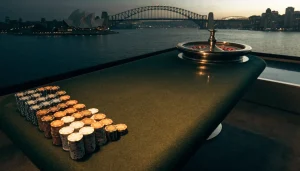
This guide distinguishes casino-linked stays from nearby hotels and flags booking, dining, entertainment and amenity details that require verification.

A casino hotel can mean several different things. It may describe accommodation operated as part of a casino property, a hotel marketed alongside casino facilities, or simply a place to sleep within reach of one. Those arrangements can look similar in a short listing, but they are not interchangeable. The name alone does not establish who operates the rooms, what a booking includes, or how the accommodation relates to the gaming venue.
That distinction matters when comparing a stay at a Melbourne casino hotel with a room at a hotel elsewhere in the city. A casino association is not, by itself, a description of the room or of the booking conditions. Nor does the word “deal” settle what has been bundled together. A price may refer to accommodation alone, while a package may attach conditions or inclusions that need to be read in their own right. The label is a beginning, not a contract.
The practical questions behind a hotel search are familiar: what kind of room is available, what the rate covers, when the booking can be changed, and whether any advertised extras are actually included. These details belong to the particular offer and the dates selected; they should not be inferred from a property’s association with a casino. A photograph cannot settle a cancellation policy. A headline price cannot explain its conditions.
Choosing an online casino in Melbourne for 2026 calls for a clear look at the details available for each option. Use these brief verdicts as a starting point for checking which information matters to you.
WinSpirit Casino
WinSpirit lists a Curacao eGaming licence, OGL/2024/923/0383, issued by Antillephone N.V. Its minimum deposit is A$30.
Ricky Casino
Ricky Casino lists crypto payouts in under an hour and PayID payouts in 1–3 business days. The minimum deposit is A$20, or A$30 to qualify for the bonus.
Uptown Pokies
Uptown Pokies has operated since 2017 and lists a Curacao licence. Its minimum deposit is A$20.
Lucky Dreams
Lucky Dreams lists a Curacao licence and supports a minimum deposit of A$20 via POLi.
JustCasino
JustCasino lists a licence from the Curacao Gaming Control Board. That is the available licensing detail for this listing.
SkyCrown
SkyCrown lists a Tobique Gaming Commission licence. Its stated payout times are around 10–15 minutes for crypto and 1–5 days for fiat; the minimum deposit is A$30.
Roby Casino
Roby Casino lists a Curacao eGaming licence under Roby Games Ltd. This listing’s available detail is focused on its licensing.
Golden Pokies
Golden Pokies lists a Curacao licence. The available information for this listing is limited to that licensing detail.
Bizzo Casino
Bizzo Casino lists a Curacao Gaming Control Board licence, with TechSolutions Group N.V. named in the licensing information.
Thor Casino
Thor Casino lists a Curacao licence from Antillephone N.V., with Versus Odds B.V. named in the details. Its minimum deposit is EUR 20.
There is also a difference between a room being at a casino property and a hotel merely being described as near the casino. “Near” is an elastic word in travel language. It can mean an easy walk, a short trip by car, or simply the same broad area, depending on the listing. Without a clear address and a stated distance or route, the description does little to explain the journey. This is not a reason to treat every listing with suspicion; it is a reason to keep the property’s identity separate from the marketing shorthand around it.
For anyone considering a stay, the sound comparison is between actual booking terms, not labels. Room category, dates, total price, inclusions, cancellation conditions and the name of the accommodation provider are the parts that can turn a vague promise into a specific arrangement. If the offer is presented through a third party, the booking confirmation and the provider’s own terms matter more than an attractive phrase on a promotional page. Fine print is not an ornamental genre.
The phrase “casino hotel” can also encourage an assumption that a stay and gambling belong to one seamless purchase. They do not necessarily do so. Accommodation is a lodging arrangement; casino play is a separate activity governed by its own rules. In Australia, the legal framework for real-money online casino games is particularly distinct: the Interactive Gambling Act 2001 prohibits operators from providing online casino-style games to people located in Australia. A hotel booking does not alter that position, and a room should not be read as an invitation or entitlement to gamble online.
 Best Casino in Perth? Online Rules and Venue GuideSeparate Perth’s physical casino from online play, with guidance on stays, dining and games. The Interactive Gambling Act 2001 restricts Australian operators.
 Canberra Casino Searches: Hotels, Poker and MoreExplore what Canberra casino searches cover, from hotel and room expectations to poker, dining, hours and online gambling; search terms alone do…
That legal distinction says something about the country’s approach to gambling: a physical venue and an online service are not treated as the same thing simply because both carry the word “casino”. It is a narrow line, but an important one. The hotel question concerns where someone sleeps; it cannot answer what services are lawful through a screen.
A search for a Melbourne casino stay, then, is best understood as a request for a particular kind of lodging—not proof of a particular room, rate, package or arrangement. The more specific the offer, the more useful its terms become. The name on the door is only the first detail.
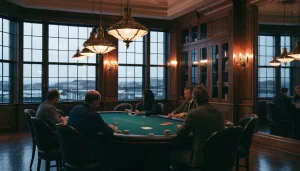
A poker room and a poker machine share a word, not a game. The first refers to poker played against other people, often at a table; a tournament is an organised format in which players compete under set rules. Poker machines, known in Australia as Electronic Gaming Machines (EGMs), are a separate form of gambling. A request about poker at a Melbourne casino cannot establish whether a particular room, tournament or schedule is available.
Poker machines, known in Australia as EGMs, are a separate form of gambling from table poker, utilizing Random Number Generators (RNG) to determine outcomes independently.
Nor does the word “rooms” settle the matter. It might refer to a poker area, a hotel room or something else. Those are different questions, and one does not supply evidence for the others. A sports bar is another distinct venue category: its name alone says nothing about what is on offer, when it is open or whether a particular event is being shown. Search phrases can make these places look like one package. They are not.
Poker machines involve no opponent making decisions across a table. In an online pokie, each spin is generated by a Random Number Generator (RNG). The RNG does not remember earlier results or keep a running score, so a previous spin cannot make a particular outcome due on the next one. A run of losses is not a signal that a win is approaching; a run of wins does not make another win more likely. The machinery has no sense of dramatic timing.
That distinction matters because people naturally look for patterns, especially when an activity supplies a stream of results. But independence is not a promise of balance within a short session. Outcomes can cluster in ways that feel meaningful without changing the odds of the next spin. Increasing a stake to recover losses does not repair the past result; it exposes more money to the next one. Chasing losses is a way to deepen them, not reverse them. A session budget, set in advance and kept within available bankroll, gives the activity a boundary. When it is reached, play should stop.
Poker-machine gambling at a venue also carries practical obligations. Venues must check identification for people using EGMs, and failing to meet applicable requirements can have legal consequences. That process belongs to machine gambling; it does not tell anything about the format or availability of a poker tournament. The categories should not be blurred merely because a casino may be associated with several kinds of play.
Likewise, a reference to a Melbourne casino being open today or now does not confirm its current operating status. Opening hours can change, and the phrase itself is not evidence. A tournament listing, if one is being considered, would need to be checked as a separate matter from general venue hours. No inference about poker tables, machine access or a sports bar follows from the existence of any one of them.
The useful distinction is therefore plain: poker-room searches concern human opponents and organised poker; EGM searches concern machine play; online pokies use an RNG whose next result is independent of the last. None of those descriptions establishes what is currently available at a particular Melbourne venue. Similar vocabulary, different stakes.
A trip to a Melbourne casino involves ordinary questions of access as well as entertainment: where a car can be left, whether valet service exists, and whether parking is free or subject to conditions. Those details can change, and the wording of a parking offer matters. A complimentary period, a discounted rate and parking included with another purchase are not interchangeable promises. Current arrangements should be confirmed with the venue before travel, rather than inferred from an old listing or an unqualified claim about free parking.
The same care applies to directions and arrival plans. A result that mentions Melbourne casino parking may refer to a nearby public facility, a venue arrangement or an offer tied to particular circumstances. Valet parking, if available, is a separate service from self-parking. Without clear, current terms, neither should be treated as guaranteed. It is a small distinction until the car is already at the kerb.
Legal Restriction
Under the Interactive Gambling Act 2001, it is illegal for Australian-based operators to provide real-money online casino games to people located in Australia.
“Online casino” has a different significance in Australia from the ordinary idea of checking a venue’s website. The Interactive Gambling Act 2001 makes it illegal for an Australian-based operator to provide real-money online casino games to people in Australia. That restriction covers games such as pokies, blackjack and roulette. A local casino’s physical presence does not make an online version of its gambling services lawful.
The position of offshore platforms is more complicated, but not a recommendation. It is technically not illegal for an Australian player to use an offshore casino; those platforms are nevertheless outside Australian regulation. That gap matters. A foreign licence is not an Australian licence, and it does not give a player the protections that come with a locally regulated service. The law draws a firm line around what operators may provide in Australia, while the status of offshore sites leaves consumers in a less secure position.
This is why “online casino in Melbourne” should not be read as a simple extension of a local venue. A physical casino and an offshore website belong to different legal and practical settings. Lawful gambling providers operating in Australia require the relevant Australian authorisation, but online casino games cannot be offered here by locally based operators under the federal restrictions. The distinction is easy to blur in advertising language. The consequences are not.
There is also a wider social contrast in the rules. Australia permits some forms of gambling while restricting online casino-style services, drawing boundaries not around gambling as a single activity but around its format and provision. That legal architecture does not certify every offshore site that remains accessible, nor does it turn a search result into a safeguard. Offshore operators are not regulated under Australian law.
 Best casino in Brisbane: what can be verifiedSeparate Brisbane casino accommodation from nearby hotels and online access, with checks on poker, pokies, dining, rewards and details the article cannot…
 Casino in Tasmania: What the Search Can ConfirmThis overview separates what a search for a Tasmanian casino stay can establish from unverified details on rooms, facilities, dining, events and…
For anyone planning an in-person visit, parking terms and access arrangements belong to the venue’s current practical information. For online play, a Melbourne address does not alter the law governing casino games. Neither a familiar name nor a polished screen changes the underlying distinction.
“Near the casino” sounds like a simple location filter. In practice, it depends on what a stay is meant to make easier: reaching the venue on foot, keeping a journey short, or staying somewhere that suits a wider Melbourne itinerary. Those are different tests, and a property described as convenient for one may not answer the others.
The phrase *Melbourne casino accommodation* can also blur two separate ideas. One is a room at the casino itself; the other is a hotel or other place to stay in the surrounding area. A nearby stay should not be mistaken for a casino package merely because the two appear together in a listing or promotion.
Distance needs context. A map pin alone cannot show whether a route is comfortable at the time of travel, whether it involves a lengthy detour, or how practical it is for someone carrying luggage. Nor does “near” carry a fixed boundary that applies to every traveller. A useful comparison would consider the actual route and the journey method, rather than relying on a broad label.
That distinction matters when accommodation deals are involved. A reduced room rate, a venue promotion and a package tied to a casino visit are not necessarily the same offer. The wording of an offer needs to establish what is included, when it can be used, and whether any conditions apply. A mention of the casino beside a room listing does not, by itself, establish a partnership or a special rate.
There is a quieter point here about how cities are sold. A hotel listing turns geography into a promise of convenience, while the word “near” leaves the effort of the journey largely unmeasured. The promise may be reasonable, but it is not a distance.
For a practical comparison, the relevant details are the property’s exact address, the route to the venue, the room conditions and the terms of any promotion. Without those particulars, naming a place as the best accommodation near the casino would be a guess dressed as advice.
Accommodation searches can also pick up questions about the casino’s location, trading hours, gaming machines or parking. These are separate matters: a room listing cannot establish venue access, operating times or facilities, and proximity does not settle how a journey will work. Keeping those questions apart prevents a hotel description from being treated as a guide to the venue.
The useful distinction is modest but important: nearby accommodation describes a relationship between a place to sleep and a destination; it does not, on its own, tell anyone how close the two are in practice, what a stay costs, or whether an advertised deal applies. For a stay planned around the casino, those details need to be checked in the specific listing and offer, rather than inferred from the word “near.”
 Western Australia Casino Guide: Hotels and Venue DetailsUnderstand the difference between rooms within a casino complex and independent nearby hotels, and what a casino-hotel listing actually means.
 Casino in Victoria: Hotels, Dining and Practical DetailsLearn how casino-run hotels differ from nearby accommodation, with context on dining, gaming searches, venue services and the limits of available details.
A casino’s phone number seems like a small fact, until it leads to the wrong department. A general enquiry, a booking question and an event request may be handled differently, and a number copied from an old directory can outlive the page that once explained it. For Melbourne casino contact details, the useful distinction is not merely between one number and another, but between a current official channel and a listing preserved elsewhere.
The same caution applies to maps. A venue map can show entrances, internal areas and points of service, but maps are practical documents, not guarantees that every route or facility remains unchanged. A location pin may identify a broad complex rather than the particular entrance someone needs. When timing matters, an official venue map and current contact information belong together: one gives the layout, the other can clarify the detail that a diagram leaves out.
Bars bring a different kind of uncertainty. A listing may establish that a bar exists, yet say little about its present hours, service arrangements or whether access is affected by a private function. Those particulars can change with the calendar and the venue’s operations. A dated third-party listing is therefore a weak substitute for an up-to-date venue notice. Even a polished page can be a record of what was once true.
Concert information is more time-sensitive still. An event announcement needs to be read as a dated notice, with the performer, venue area, booking route and event conditions checked against the current listing. A concert held at a casino does not necessarily take place in the gaming area; large complexes can contain separate spaces with separate arrangements. The name of the wider venue, by itself, does not settle where an event is staged.
Official venue channels are the most reliable source for confirming contact numbers, bar hours, concert schedules, and maps, as this information can change frequently.
Baccarat and craps raise a related question of specificity. A search for a casino game does not establish that a particular Melbourne venue offers it, that it is operating on a given date, or that its rules and table arrangements are unchanged. Game names travel easily between search results; the local details do not. A current venue notice is a better basis for confirming availability than an assumption built from the word “casino”.
There is a social history tucked into these practical searches. Contact details, bar listings and event calendars turn a sprawling venue into something legible: a place to call, meet, attend or find one’s way around. That convenience depends on information being maintained, not merely published once. The small print is part of the venue.
For the same reason, no single directory should be treated as the final authority for contact numbers, bar hours, concert schedules or maps. Official venue channels are the sensible place to confirm those particulars before making arrangements, especially where an event date or a specific service is involved. Information ages quietly. A phone number, unlike a building, can move without leaving a trace.
Breakfast, a buffet and a rewards programme are separate questions, even when they sit beneath the same casino-resort label. The label can suggest a single, seamless offer; it does not establish what is being served, when it is available, or what membership includes. Those are details that belong to the particular venue and date, not to the phrase “casino resort” itself. A buffet breakfast, in particular, should not be inferred from a general buffet listing: the meal, service period and booking conditions may be distinct.
 Adelaide Casino: Hotel, Poker and Venue GuideLearn how hotel bookings relate to Adelaide Casino, plus what the page covers on poker, parking, dining, nearby stays and practical venue…
 Best Pokies in Brisbane: Hours and Venue ChecksLearn how venue opening hours differ from gaming-room availability, what local searches can establish, and the stated RGO requirement for venues with…
The same restraint applies to rewards. A programme’s name, eligibility rules, earning structure and redemption conditions are not interchangeable from one operator to another. Nor does a search for a casino’s rewards scheme show that a particular benefit is available. Membership can sound like a gift; its terms are the actual arrangement. Food and hospitality searches deserve the same plain distinction between a category of service and a confirmed offering.
Jobs are another strand in these searches, though not a perk of a stay. A venue’s employment opportunities, if any are advertised, depend on current recruitment and the role. Search wording alone cannot establish vacancies, requirements or application dates. Hospitality and gaming workplaces also contain very different kinds of work, so a broad label such as “casino jobs” says little about a particular position. The name on the building is not a job description.
Free spins require a different kind of small print. They are promotional terms attached to online gambling, not a breakfast or loyalty benefit at a Melbourne venue. For people physically in Australia, the Interactive Gambling Act 2001 prohibits operators from providing real-money online casino games, including slots, poker and table games. Offshore platforms are not regulated under Australian law, and their dispute options may be limited; winnings may also be at risk if an operator becomes insolvent. This is not a route to treat as an Australian casino offer.
Attention Offshore gambling platforms are not regulated under Australian law, meaning consumer protections are absent and winnings may be at risk if an operator becomes insolvent.
Where a promotion is encountered, the wagering requirement determines how much play is required before winnings can be withdrawn. A report published by psu.com describes free-spin winnings as carrying requirements in a range from 20 to 50 times the winnings. That is a report about terms, not a promise that any particular promotion uses those figures. A separate specialist review describes a thirty-times wagering condition. The difference is a reminder that promotional wording is not a standard contract.
Terms may also impose a maximum cash-out, or allow winnings to be voided under specified clauses. Pokies can count fully towards a wagering requirement, but that does not make the requirement disappear: the relevant game contribution and the eligible balance still matter. A headline offer is the bright sign; the conditions are the mechanism behind it. Read the mechanism.
No promotion changes the underlying odds or turns gambling into a dependable source of money. Losses are not a reason to raise stakes or keep playing in pursuit of recovery. A session budget should be set from available gambling funds, not money needed for groceries or rent; hoping that play will cover essentials is an illusion. Those are sober terms for a business built to make the hopeful ones more attractive.
Whether a Melbourne casino is open is a question with a date attached, even when the wording does not show one. Trading status, access arrangements and scheduled activities can change; a past notice or an old review cannot establish what is happening now. A claim that the venue has reopened also needs a clear scope: it may refer to the whole property, a particular area or a specific service. Those are not interchangeable announcements.
 Darwin Casino: Rooms, Dining and Visitor InformationExplore Darwin Casino’s place in the city, plus coverage of hotel stays, hours, poker, parking, dining, nearby accommodation and visitor searches.
 Instant Payout Online Casinos in Australia: The FactsLearn what instant-payout claims mean, how verification and bonus terms affect withdrawals, and why no Australian online casino licence has been issued.
The same caution applies to development. A proposal, a planning decision and completed construction describe different stages, and a report about one should not be read as proof of the next. Any account of a Melbourne casino development needs to distinguish what has been proposed from what has been approved or built. Without that distinction, the language of progress can do more work than the facts.
Events are especially perishable. A performance or public programme listed in an old calendar says little about the current schedule, while promotional material may describe a past event as though it were still forthcoming. Current dates and cancellations belong in the venue’s latest published notices, not in an evergreen review. The date matters.
Employment information ages just as quickly. A previous vacancy does not show that a role remains open, and a general description of working at a casino is not evidence of present recruitment. Anyone assessing employment opportunities needs a live listing and its own conditions; recycled job summaries can outlast the opening they describe.
A review can still be useful, but only for the time and experience it records. It may reflect an earlier operating period, a particular event or one visitor’s view. It cannot, by itself, settle whether the casino is open today, whether a reopening has occurred, or what development is under way. Reviews are snapshots, not notices.
There is a broader Australian context to the word “casino.” The Interactive Gambling Act 2001 prohibits operators from providing real-money online casino games, including slots, poker and table games, to people in Australia. That legal position concerns online services; it does not answer practical questions about a physical Melbourne venue’s hours, events or construction. Treating those subjects as one would confuse two different matters.
For a current account of opening status, event dates, recruitment or building work, the useful evidence is a recent, relevant announcement or record. If none can be located, certainty would be theatrical. The honest description is simply that the detail has not been established—not that the venue is open, closed, hiring, hosting an event or undergoing a particular change.
A meal associated with a casino is still a meal, with the ordinary questions attached: what is served, what it costs, whether the menu suits a particular diet, and whether a table can be booked. The casino setting can make those questions seem like part of a larger night out, but atmosphere is not a substitute for the details that shape a dining decision.
The phrase “Melbourne casino restaurant” can mean several things. It may refer to dining inside a casino complex, a place nearby chosen before or after a visit, or simply a restaurant someone expects to find under the casino’s name. Those are different plans. A venue within a complex and an independent restaurant in the surrounding city may have different operators, booking arrangements and opening schedules. Treating them as interchangeable can leave the practical part of an evening surprisingly vague.
Menus are especially resistant to assumption. A photograph, an old review or a description copied across several pages can outlast the dishes it describes. Seasonal produce, staffing, supplier changes and the ordinary business of revising a menu all make published details time-sensitive. Prices can shift too. A dish remembered from a previous visit is not necessarily a promise that it remains available.
Dietary requirements need equally precise information. Broad labels such as “vegetarian-friendly” do not explain ingredients, preparation or the possibility of cross-contact. Allergy information should come from the restaurant responsible for the food, rather than inference from a dish name. The distinction is mundane, but useful: a menu tells what is offered; a direct answer from the kitchen can clarify how it is prepared.
Booking details matter for a different reason. A restaurant may take reservations, rely on walk-ins, or handle larger groups through a separate process. None of those arrangements can be inferred merely from its association with a casino. Nor does a location label establish whether a booking is required, how long a table is held, or what happens when plans change. These are operating conditions, not decorative footnotes.
The broader setting can also distort expectations. A casino’s scale or reputation says little about the character of a particular dining room, its price range or the pace of service. Those qualities belong to the restaurant itself. For a meal planned around an event or a long evening, the useful information is concrete: current menu, current prices, booking terms, accessibility and dietary responses. Without those particulars, “dining at the casino” remains a setting, not a recommendation.
That is the small discipline of choosing a restaurant: separating the appeal of the place from the information needed to make a meal work. A name can suggest an occasion. Only current details can describe the table.
A Melbourne casino address looks like a simple piece of information: a line to copy into a map. Yet an address can mean the main entrance, a hotel entrance, a rideshare drop-off or a postal address, and those are not interchangeable. Without a current venue-published listing to distinguish them, naming one would create confidence rather than clarity. The same caution applies to spelling out a location from memory; familiar landmarks are not a substitute for a checked address.
The spa searches point to a different kind of uncertainty. A “day spa” may suggest an independently bookable treatment business, while a casino spa could be imagined as a hotel amenity. Neither phrase establishes that a spa operates at the venue, what it offers, or whether access is limited to hotel guests. Those are practical distinctions, not fine print. A service that exists nearby is not necessarily part of the casino, and an old listing can keep circulating after arrangements change.
Bars invite a similar assumption: that the word “casino” supplies a dependable list of venues within it. It does not. Names, locations and operating arrangements need to be checked against current venue information, rather than inferred from a past visit or a directory entry. This is not a matter of being coy. It is the difference between describing a place and describing what someone expects the place to contain.
Careers searches also deserve more than a recycled vacancy link. Casino employment can span very different roles and employers, but a general search phrase cannot confirm that a particular position is open or who is recruiting. Current vacancies belong with the organisation responsible for hiring; an old listing is merely old.
Dress-code questions tend to invite folklore. A remembered rule from one bar, event or gaming area cannot safely be extended to every part of a large venue. Any current requirement should be confirmed for the intended area and occasion, rather than treated as a single house rule.
The request for casino games is broader still. It may mean what is available on the premises, not a promise that every game is offered at every time or location. Physical gaming and online gambling are not interchangeable categories: under Australia’s Interactive Gambling Act 2001, operators cannot provide real-money online casino games to people in Australia.
Practical details are modest things, until they are wrong. Address, spa access, bar listings, vacancies and clothing rules all change on different schedules. A current, venue-specific check is worth more than a confident answer assembled from a name and an assumption.
Food courts and swimming pools belong to different kinds of outings, though a large entertainment venue can make them seem naturally bundled. The word “casino” alone establishes neither. A Melbourne casino’s food options cannot be inferred from the presence of gaming, and a pool should not be treated as part of the venue without a current, venue-specific confirmation.
That distinction matters because “food” can mean anything from a quick meal to a full dining experience. A food court, in particular, suggests a shared space with several vendors; it is not simply another name for a restaurant. The practical details that would make such a space useful—what is served, when it operates and whether it is open to visitors—need confirmation from the venue before plans are built around it.
A pool carries its own assumptions: access, opening times and whether it belongs to a hotel or another part of a complex. None follows automatically from a casino’s name or location. The resort image is persuasive, but an image is not an amenity.
For anyone comparing Melbourne venues, the sensible distinction is between a facility confirmed by the operator and one inferred from photographs, old listings or the general promise of a leisure complex. Official venue information is the place to establish whether food-court service or pool access is currently offered, and under what conditions. Until then, neither should be counted on as part of a visit.
The broader point is modest. Food and recreation may sit alongside gambling in the public imagination, but each is a separate service with its own access and operating arrangements. The label does not do the checking.
Yes. The Interactive Gambling Act prohibits operators from providing online casino-style games, including pokies, to people located in Australia. Offshore platforms are not regulated under Australian law.
A VPN can make it appear that you are playing from another country, but that does not change the legal status of the service or its licensing conditions.
Examples include NetEnt’s Mega Fortune and Hall of Gods, as well as NYX Gaming/Next Gen titles Foxin’ Wins and Doctor Love. Geo-blocked games may not show in the lobby or may fail to load from an Australian IP address.
You must be 18 or older to gamble on poker machines in NSW.