A guide to reading pokies searches, venue details and legal distinctions without treating a spin as a forecast.
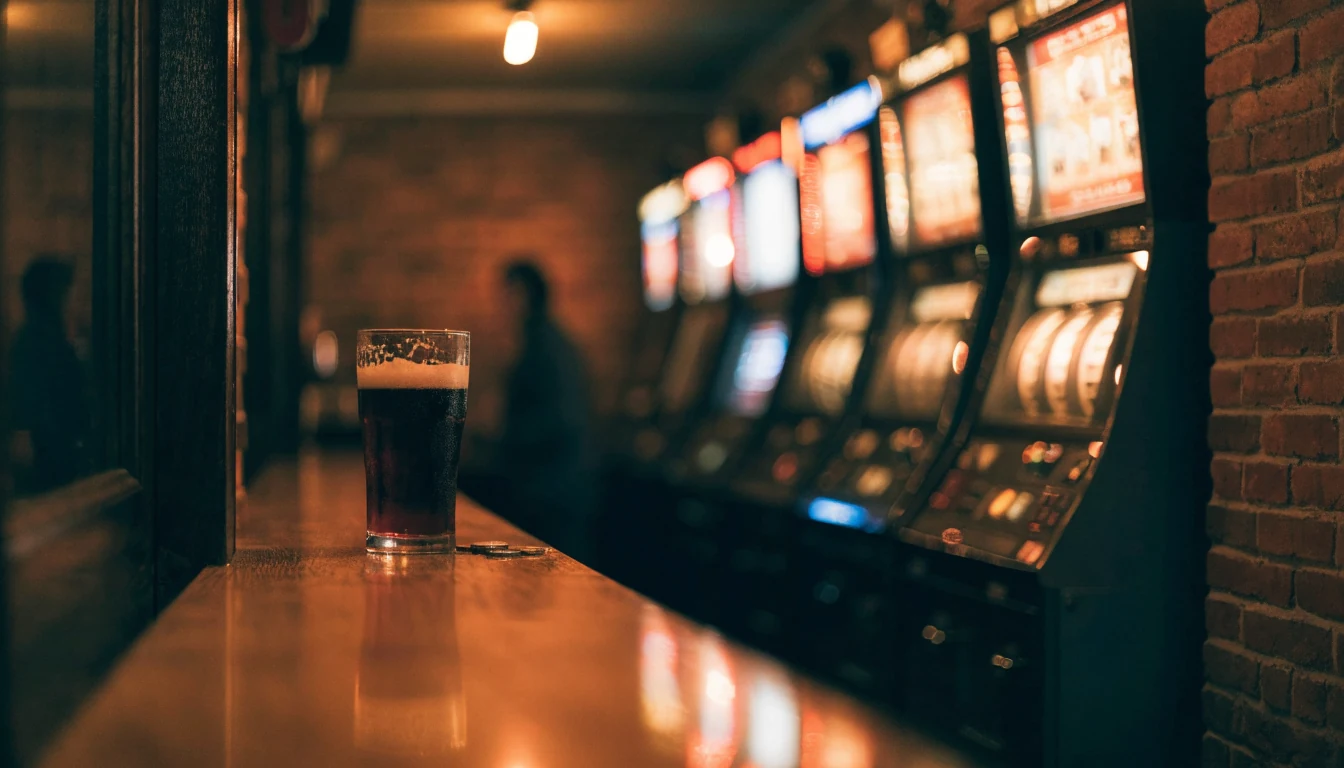
A request for the best pokies in South Australia sounds like it ought to have a neat answer: a title, a return figure, perhaps a promise that one machine is kinder than another. But a game’s name alone cannot establish what it may return at a particular venue, and a run of spins cannot reveal what the next one will do. The distinction matters more than any ranking.
Each spin is generated as a separate random event by a Random Number Generator. Its result does not carry a memory of earlier results. A string of losses does not make a win due, just as a recent win does not make another one less possible. Patterns can feel persuasive when viewed after the fact; the machine’s next outcome is not obliged to complete them.
This is a narrow point, but an important one. People naturally make stories from sequences: a machine seems “cold”, then “ready”, or appears to be paying because several wins arrived close together. Such descriptions may capture the mood of a session. They do not show that the machine has changed its behaviour. Randomness can produce clusters and gaps without turning either into a signal.
Choosing pokies in South Australia means considering which operators have clearly stated details relevant to your play. This list provides a concise reference to the available information for each option.
WinSpirit Casino
WinSpirit Casino lists a Curacao eGaming licence, OGL/2024/923/0383, issued by Antillephone N.V. Its minimum deposit is A$30.
Ricky Casino
Ricky Casino lists crypto payouts in under an hour and PayID payouts in 1–3 business days. The minimum deposit is A$20, or A$30 to qualify for the bonus.
Uptown Pokies
Uptown Pokies operates under a Curacao licence and has been operating since 2017. Its minimum deposit is A$20.
Lucky Dreams
Lucky Dreams lists a Curacao licence and a minimum deposit of A$20 when using POLi.
JustCasino
JustCasino lists a licence from the Curacao Gaming Control Board.
SkyCrown
SkyCrown lists a Tobique Gaming Commission licence. Its stated payout times are about 10–15 minutes for crypto and 1–5 days for fiat; the minimum deposit is A$30.
Roby Casino
Roby Casino lists a Curacao eGaming licence held by Roby Games Ltd.
Golden Pokies
Golden Pokies lists a Curacao licence.
Bizzo Casino
Bizzo Casino lists a Curacao Gaming Control Board licence, with TechSolutions Group N.V. named in the licence details.
Thor Casino
Thor Casino lists a Curacao licence through Antillephone N.V., with Versus Odds B.V. named in the details. Its minimum deposit is EUR 20.
RTP, or return to player, is often treated as though it were a forecast for an individual visit. It is better understood as a setting describing a game’s return over play, not a promise about the outcome of a particular session. A published percentage cannot tell a player whether the next spin will win, how long a balance will last, or what a single visit will produce.
There is another complication. A specialist review reports that some game providers give casinos a choice of RTP settings for the same pokie. That means a title can be configured with different return percentages at different casinos. Recognising a game’s name, therefore, does not by itself reveal which setting is in use at a given location. The figure would need to be tied to the specific version and venue to be meaningful.
That qualification changes what “best paying pokies” can sensibly mean. A game cannot be called the best-paying option in South Australia merely because its title is familiar or because a return figure appears somewhere in a general description. Without a figure linked to the actual configuration, comparisons risk putting unlike settings under one label. And even when a setting is known, it remains a long-run measure, not a short-term promise.
The word “best” also smuggles several different preferences into one. A person may mean a higher published return, a style of play they enjoy, or a session that feels less volatile. Those are not interchangeable judgments. The facts about randomness and RTP can clarify what a figure does; they cannot rank unnamed games or guarantee a more satisfying result.
 Regional Pokies: Online Casino Topics Across AustraliaExplore regional searches for pokies and casinos, alongside topics such as live dealer games, keno, real-money play and payouts.
 Best Casino in Perth? Online Rules and Venue GuideSeparate Perth’s physical casino from online play, with guidance on stays, dining and games. The Interactive Gambling Act 2001 restricts Australian operators.
There is a cultural habit behind the wish for a reliable ranking. Games invite comparison because their names and themes are easy to remember, while probabilities are harder to picture. A familiar title feels like a known quantity. Yet the name is not the setting, and neither is a forecast. The confidence attached to a label can exceed what the label actually tells.
A useful comparison starts with precise questions: does a return figure refer to the same game version, and is it attached to the casino where the game is being played? If not, the comparison may be incomplete. A general figure can still be informative as a description of a setting, but it should not be mistaken for evidence that a particular session will pay out at that rate.
Nor can a short sequence of results settle the matter. A few wins do not prove that one configuration is generous; a losing stretch does not prove that it is withholding a return. Each new spin is its own event. Looking backward may make the sequence seem patterned, but that impression is not a mechanism.
For anyone weighing South Australian casino pokies, the honest boundary is simple: a game title identifies a game, while a relevant RTP figure depends on the setting used for that game. Neither tells the future. The appealing certainty of a “best” machine is therefore more fragile than it sounds.
Randomness offers no plot.
Opening hours are a practical question before they are anything else. A room described as open may still have a different schedule from the venue around it, and the status of gaming machines is not necessarily captured by a general notice that a building is open. For anyone arranging an outing, the useful distinction is between the venue’s doors being open and its gaming area operating.
That distinction matters at both ends of the day. Someone looking for early-morning play, or hoping to stay late, needs a current schedule for the particular venue rather than an assumption drawn from the word “casino”, “club” or “hotel”. Those labels describe kinds of places, not a common timetable. A listing can also be less useful if it gives only the venue’s overall hours and says nothing about its gaming room.
The soundest habit is to confirm the schedule directly with the venue before setting out, especially when the visit depends on a particular opening or closing time. Official venue information is preferable to an old directory entry or a passing mention online. If the details are unclear, a direct call can resolve whether the gaming area itself is operating, rather than merely whether another part of the premises is open.
There is a small civic fact beneath this seemingly ordinary question of timing. A report by regionriverina.com.au says that, from 1 July, a venue operating more than 20 gaming machines is required to have a dedicated responsible gambling officer, or RGO, on duty while those machines are running. The requirement attaches to operation, not simply to the building’s existence or its general business hours. A quiet room and a switched-off room are not the same thing.
 Best Pokies in Sydney: Local and Online SearchesLearn how Sydney location searches differ from online pokies queries, and what venue, opening-hours and machine-operation searches can—and cannot—confirm.
 Big Red Pokies Online in Australia: Free PlayLearn how free play differs from real-money gambling, why a demo cannot predict results, and what the Big Red name alone does…
The distinction is easy to miss in a culture that tends to treat opening times as a single line on a door or a map listing. In practice, a venue can contain several activities with different rhythms. Food service, entertainment, bar service and gaming need not all begin or end together. A broad “open now” label can therefore answer a narrow question about premises while leaving the important question of machine operation unresolved.
This is not an argument that every schedule is unstable, or that a late or early visit is inherently different from one made at another hour. It is simply a reminder that operating status belongs to a particular place at a particular time. The phrase “open late” has no universal meaning when it is detached from the venue and the activity being described. Even a current-looking listing is only useful to the extent that it covers the room in question.
The RGO condition gives the clock a regulatory edge. Where a venue falls within the stated threshold, the officer’s presence is part of the conditions for machines to operate. That does not turn the officer into a source of opening-time information, nor does it make the venue’s schedule predictable. It does show that the question of whether machines are running is not merely a matter of convenience: operation comes with an on-duty staffing obligation.
From 1 July, venues operating more than 20 gaming machines are required to have a dedicated responsible gambling officer (RGO) on duty while those machines are running.
For someone deciding whether to leave home, a short check can prevent a wasted journey. The venue’s own current notice is the natural starting point; when that notice speaks only about the premises, clarification from staff can establish whether the gaming room is open as well. This is especially worthwhile around public holidays, special events or temporary changes, when familiar routines may not apply. No elaborate investigation is required. The aim is just to check the right thing.
The phrase “open now” sounds definite because the present tense is so confident. Yet it can refer to a door, a service, or the machines themselves, and those are not interchangeable. South Australian gaming rooms should be approached with that modest distinction in mind: confirm the particular room’s hours, and do not infer its operating status from a general venue listing. The published requirement for an RGO applies while qualifying machines operate; it does not supply a timetable for any individual room. Opening hours remain local facts, best checked where they belong.
“Near” looks like a simple measure until a place has more than one centre, an airport sits beyond the familiar city grid, or a result belongs to a different state altogether. A search for pokies near an airport or in a central business district is really asking for a usable location: somewhere close enough to fit into a journey, and specific enough to distinguish one suburb or town from another. A broad South Australia label cannot do all that work.
 Best pokies in Perth: venue hours and accessLearn why venue opening hours may not match gaming-floor hours, and what to verify when checking Perth access, venue rules and online…
 Casino in Hobart: What to Check Before You VisitFind out how live poker differs from pokies, what to verify about tables and tournaments, and how lodging, dining and other visit…
The wording can also blur the boundary between state and place. “South Australia, Vic” may combine two locations rather than identify a single destination; “Parkes” does not, by itself, establish that a result is in South Australia. And an airport search may leave unclear which airport is meant. These are not minor quirks of typing. They are clues that a map pin needs to be read in its full context, not treated as proof that a venue is nearby.
Central districts pose a different problem. “CBD” sounds precise, but it describes an area rather than a particular building or street. A result described as central could be convenient for one itinerary and inconvenient for another. The same is true of searches for north or nearby locations: direction and distance matter only in relation to a starting point. Without a clearly identified venue and location, a list of pins can suggest certainty while leaving the practical question unanswered.
That distinction matters because geography often arrives disguised as convenience. A stop near a terminal may be imagined as part of a layover; a central venue as an easy addition to an evening; a nearby one as a small detour. Those impressions can make the decision feel lighter before the actual route, travel time and surroundings are understood. None of those details can be inferred from the word “near.”
A sensible location check separates three things: the exact venue name, the address shown for it, and the map position in relation to the intended destination. Each should agree before the location is treated as settled. A broad regional label is not an address, and a map result is not a promise that the route will suit a particular journey. When the place itself remains ambiguous, the practical answer is not to fill the gap with assumption.
Proximity also has a human scale. A short trip can still become a long session; an easy stop can be harder to leave than it was to make. The distance from an airport or the CBD does not say anything about how much time or money a person will spend once there. That is why the decision to visit is better made with a boundary already in place, rather than left to the momentum of being nearby.
Deposit limits and loss limits can set financial boundaries; session time limits can mark when a visit ends. Self-exclusion offers a stronger barrier for someone who needs not to enter or continue gambling. These are standard responsible-gambling tools, not features of a particular suburb or route. Their purpose is less glamorous than a convenient map pin. More useful, too.
A proximity search can narrow a map. It cannot judge whether a stop fits the day, whether the location is clear, or whether gambling belongs in the plan at all. The final step is therefore not another guess about “near”; it is deciding whether the visit is wanted on defined terms. A place may be close. The decision should still have boundaries.
A search for online pokies in South Australia can look like a continuation of a visit to a local gaming room. Legally, it is not. A machine played at a venue and a real-money game supplied over the internet sit on opposite sides of the Australian regulatory divide.
The Interactive Gambling Act 2001 makes it illegal for companies to provide real-money online pokies to people in Australia without a domestic licence. No Australian online-casino licences have been issued, so there is no locally licensed online casino. The prohibition is directed at the companies supplying the service, rather than at individual players.
That distinction matters. Australians are not liable under this law simply for playing on an offshore site that accepts them; the operator is the party targeted. But the absence of player liability is not the same as Australian protection. If an offshore casino refuses to pay winnings, the player has no legal recourse in Australia against it. A screen can suggest the familiarity of a local service while leaving its customer outside the practical reach of local remedies.
Deposit offers do not change that position. A no-deposit promotion, a real-money account or a claim about high betting limits is still part of an online gambling service, not a South Australian venue. Nor does wording such as “best paying” establish that an online game is locally authorised or that a promised return will translate into winnings. Promotional language can be vivid; jurisdiction is less so.
The legal arrangement is easy to misread because the consequences fall asymmetrically. The operator’s conduct is prohibited, while the player is not made an offender merely by taking part on an offshore site that accepts them. Yet if a dispute arises over a balance or a payout, the player cannot rely on Australian legal recourse against that casino. Permission from a foreign operator to open an account is not the same thing as protection from Australian institutions.
No Local Recourse
If an offshore online casino refuses to pay winnings, players have no legal recourse within Australia against the operator.
That is the difference between legality for the player and a locally regulated service. In this market, those ideas do not travel together. An offshore site may accept Australian customers, but it does not thereby become an Australian-licensed casino; there is no such licence to hold. The law’s focus on operators may sound like a technical distinction. Its practical meaning is plain: the company faces the prohibition, while a player who is not paid has no Australian remedy against the offshore casino.
For anyone comparing an online offer with an in-person option, the useful question is not whether the promotion looks generous or the game carries a familiar name. It is whether the service is being supplied under an Australian online-casino licence. None exists. That leaves online real-money pokies in a markedly different position from gaming in a South Australian venue, however similar the reels may appear on a screen.
No local licence. No local recourse.
A venue is more than the room containing the machines. It is a public setting where staff, patrons and the rules of gambling meet, often in the middle of ordinary social life: a meal, a club event, an evening out. That makes a question about pokies venues in South Australia partly a question about who is expected to notice when play stops looking recreational.
A list of places, even if it were complete, would not answer that. A venue’s name says little about how it responds to a patron in distress or what happens when staff see signs of gambling harm. Oversight is made visible less by a promotional description than by the procedures that turn concern into action.
One reported change concerns the records venues must keep. Regionriverina.com.au reported that venues would be required to maintain a gambling incident register, documenting events that may indicate a patron is at risk of, or affected by, gambling harm. The point is not to turn a difficult moment into paperwork for its own sake. A record can make an incident legible beyond the person who happened to witness it, and help establish whether a venue’s response was more than a passing conversation.
The same report described a transition period for venues to remove signage and introduce responsible gambling officers. It put the grace period at one month. That is a practical interval, not a permanent exemption: the change concerns how a venue presents gambling and who is responsible for attending to risk within it. Signage is part of the environment. So is the presence of a named person with a defined role.
This is a different way to assess what “best” might mean in a venue search. A favourite machine or a lively room may be easy to describe; supervision is less theatrical. It rests on staff being able to recognise concerning behaviour, respond appropriately and preserve an account of what occurred. The register gives an incident a trace. The officer gives responsibility a human point of contact.
Neither measure makes gambling harmless, and neither guarantees that every warning sign will be recognised. They do, however, place obligations on the venue rather than leaving the entire burden on an individual patron. That matters in places where machines sit within wider social spaces, and where a person may be among familiar faces while still experiencing harm.
A venue’s public character carries a public duty. The small administrative details are part of that duty, not decoration around it. Records, roles and changed signage are unglamorous safeguards. Better that way.
A request for pokies at any hour is really a request for certainty: that a gaming room will be open, that its machines will be running, and that neither fact will change between setting out and arriving. Those are separate conditions.
A venue’s ordinary opening time and the hours when its pokies are operating need not be treated as the same thing. The distinction is plain, if not especially useful to someone hoping for an effortless late-night plan.
The more concrete point concerns what must be in place when machines are running. A report by regionriverina.com.au describes a requirement taking effect from 1 July: at a venue with more than 20 gaming machines, a dedicated responsible gambling officer (RGO) must be on duty during their operation. The threshold concerns the number of machines at the venue; the duty itself is tied to the period when they are operating.
That is a staffing condition, not a promise of access. It does not establish that a venue is open at a particular time, that its machines are available whenever the building is, or that any South Australian room stays open all night. The officer’s presence is part of the framework around machine operation, not a timetable for it.
There is a small but telling shift in that arrangement. A gaming room is not treated only as a space containing machines; its operation carries a defined responsibility for having a dedicated person on duty. The rule attaches that responsibility to larger machine venues while their machines are in use. It makes supervision part of the conditions of operation, rather than a detail left entirely to a venue’s discretion.
For anyone weighing up a late visit, the useful distinction is therefore between a claim about opening hours and a rule about operating machines. The latter is specific: the reported RGO requirement applies at venues above the stated machine threshold, while those machines are running. It cannot answer whether a particular room is open at midnight, in the early morning, or at any other chosen moment. Round-the-clock access remains unestablished. A rule is not a roster.
A familiar casino name can make a place seem closer than it is. But “Crown” in a South Australian search does not, by itself, establish a local venue, a particular pokies room or what machines might be available there. Nor does the phrase “maximum cash payout” point to a single state-wide figure. A name is not a venue listing, and a search phrase is not evidence of an operating detail.
That distinction matters because casino brands, physical venues and online gambling services belong to different parts of the regulatory picture. The authority responsible for enforcing the Interactive Gambling Act 2001 is the Australian Communications and Media Authority, or ACMA. Its online role is practical as well as legal: it blocks access to illegal offshore gambling sites, and Australian internet service providers are required to follow ACMA’s blocklist.
ACMA Enforcement
The Australian Communications and Media Authority (ACMA) identifies illegal offshore gambling sites for blocking by Australian internet service providers.
A blocked site is not a local casino with a different address. It is an online service that ACMA has identified for blocking. The blocklist therefore says something about enforcement of online rules; it does not confirm where a particular brand operates in South Australia, which pokies a venue has, or how a venue handles cash payouts. Different questions, different evidence.
There is a small but consequential shift in perspective here. A brand-led search invites the mind to assemble a whole place from a name: rooms, machines, opening hours, payouts. Yet the regulator’s work is not to turn that picture into a directory. ACMA’s blocking function concerns illegal offshore gambling sites, while the status of a physical venue would need to be established through information about that venue itself.
This is why a result mentioning Crown should not automatically be read as proof of a South Australian location or offering. And a page about online access should not be mistaken for a guide to pokies on a venue floor. The internet compresses categories; regulation has to separate them.
The distinction is less glamorous than a casino name. It is also more useful. Where an offshore site is blocked, the block reflects ACMA enforcement and the obligation on internet providers to comply. It does not certify a substitute venue, endorse a brand, or answer what a particular machine might pay. No such inference follows.
A name can travel. Jurisdiction cannot.
A club in the CBD may appear in a mental map of places to spend an evening, but the presence of pokies should not be assumed from the word “club” or from a central address. Nor does “best” settle what matters during a session. A machine’s appeal is personal; the more consequential question is whether the boundaries around play are decided before the room’s lights and sounds begin to make time feel negotiable.
Deposit limits, loss limits and session time limits are standard responsible-gambling tools. Each marks a different edge: what can be put in, what can be lost, and how long a session can continue. They are not predictions about outcomes, and they do not make a session harmless. Their value is practical. A boundary set in advance is less vulnerable to the small bargains made with oneself after a loss or a near miss.
The distinction between a limit and a wish is plain enough. “Only a little longer” is not a time limit. A loss limit matters only if play stops when it is reached. Without that decision, the number is decoration. Dry, but useful.
Self-exclusion is a stronger boundary for someone who wants access to gambling to stop, rather than merely be contained. It belongs in the same conversation as limits, though it is not just another setting for a single visit. Someone considering it should check the scope and process of the relevant arrangement, including whether it covers the places they attend.
BetStop is a separate service and should not be mistaken for a universal venue exclusion scheme: it applies only to Australian-licensed operators and does not bind offshore sites. That distinction matters because the word “self-exclusion” can sound broader than the system behind it. A safeguard is only as wide as its reach.
For anyone weighing up a club visit in Adelaide’s central area, the useful preparation is therefore not a ranking of machines or rooms. It is a decision about what amount, loss and time remain acceptable—and what action follows when a limit is reached. If the answer is that play should not continue, self-exclusion may be more fitting than another promise to stop later.
Cashless language can make several different things sound like one. A venue may have payment arrangements for its premises; PayID, by contrast, is a way to route a bank transfer using an alias. Its presence in Australian banking does not establish that a South Australian venue accepts it at a gaming machine, or that any particular machine is cashless.
PayID works over the New Payments Platform (NPP). Instead of entering account details, a sender can use an email address, mobile number or ABN linked to the recipient’s account. The NPP is used by all major banks and protects transfers with end-to-end encryption. Those are properties of the payment network, not a statement about how pokies in a gaming room take payment. Banking infrastructure and venue equipment belong to different chapters of the same transaction.
That distinction matters because a payment method can be familiar without being available for every purpose. PayID’s role as an account-to-account transfer facility says nothing by itself about a venue’s machines, their settings or the arrangements at a counter. A cashless label is not a technical specification.
Geography causes a similar blur. Newcastle is in New South Wales, not South Australia. A result about pokies there cannot be carried across the state border as evidence of a South Australian venue or its facilities. The word “Newcastle” may attach to several places in ordinary usage, but a state name is the useful part of the description. Maps are less sentimental than search boxes.
For South Australian venues, cashless operation has to be established venue by venue. Neither the existence of PayID nor its integration with the NPP fills that gap. It identifies a means of transferring money between accounts; it does not identify which local machines accept a cashless payment. A payment rail is not a venue directory.
The legal threshold is simple: gambling in Australia is restricted to adults aged 18 or over. That rule applies across forms of gambling, including pokies played online. A South Australian setting does not create a lower age limit, and a preference for a particular game cannot change the rule.
Age is a boundary, not a recommendation. Reaching it makes a person old enough under the law; it does not turn gambling into a reliable way to earn money, nor does it say anything about whether a particular pokie is suitable. The distinction matters in a culture where adult pastimes are often presented as ordinary leisure, while the risks attached to them are treated as someone else’s problem.
The same threshold applies whether the subject is a night out involving pokies in South Australia or play through an online service. The setting changes; the age rule does not. That is the narrow point worth carrying into any discussion of the best pokies in South Australia: legality begins with adult eligibility, not with a ranking, a venue name or a machine’s reputation.
An age limit also draws a line around who may take part, rather than promising what follows once that line is crossed. Gambling remains gambling. No game title, location or search for a popular pokie can make the outcome certain or make the activity suitable for every adult.
In Australia, the legal minimum is 18. It is a clear rule, and a modest one: adulthood permits participation, but it does not settle the more personal question of whether to play.
Yes, Australians can legally play on offshore sites that accept them, but offering real-money online pokies to Australians without a domestic licence is illegal for companies. No Australian online casino licences have been issued, and players have no legal recourse in Australia if an offshore casino refuses to pay.
Yes. PayID is treated like any other qualifying deposit method at the sites that recommend it.
Yes. Some providers let casinos choose between different RTP settings for the same game, so the return percentage can vary by casino.