The available information does not identify a specific Tasmanian venue or verify its accommodation, gaming, dining, facilities or operating details.

A casino hotel sounds like a single, settled category: a place to sleep attached to, or closely associated with, a gambling venue. In practice, the phrase can describe several different arrangements. A hotel may be part of a casino complex, operate independently nearby, or simply appear in travel results alongside a casino. Those distinctions matter when the stay itself is the point of the trip.
The words “casino hotel” do not, on their own, establish which arrangement applies in Tasmania. Nor does a broad label tell anyone what a room contains, whether a property is currently bookable, or whether a particular rate includes anything beyond the night’s accommodation. A search phrase expresses an intention; it is not a property description.
That distinction is especially important when a destination is named without a particular venue. “Casino hotels in Tasmania” may sound like a ready-made category, but it does not identify a hotel or confirm a relationship between a hotel and a casino. A reliable account needs a named property and evidence of what connects it to the venue. Without that, presenting a stay as a casino experience would turn a traveller’s assumption into an asserted fact.
Choosing an online casino while in Tasmania calls for attention to the details that can be verified, such as licensing, minimum deposits and payment times. This overview offers a concise reference to the available information for each listed operator.
WinSpirit Casino
WinSpirit Casino lists a Curacao eGaming licence, OGL/2024/923/0383, issued by Antillephone N.V. Its stated minimum deposit is A$30.
Ricky Casino
Ricky Casino lists a minimum deposit of A$20, while A$30 is required to qualify for the bonus. Its stated payout times are under an hour for crypto and 1–3 business days for PayID.
Uptown Pokies
Uptown Pokies is described as operating since 2017 and holding a Curacao licence. Its minimum deposit is A$20.
Lucky Dreams
Lucky Dreams lists a Curacao licence and a A$20 minimum deposit via POLi.
JustCasino
JustCasino lists a licence from the Curacao Gaming Control Board.
SkyCrown
SkyCrown lists a Tobique Gaming Commission licence. Its stated payout times are around 10–15 minutes for crypto and 1–5 days for fiat, with a A$30 minimum deposit.
Roby Casino
Roby Casino lists a Curacao eGaming licence held by Roby Games Ltd.
Golden Pokies
Golden Pokies lists a Curacao licence.
Bizzo Casino
Bizzo Casino lists a Curacao Gaming Control Board licence, with TechSolutions Group N.V. named as the company.
Thor Casino
Thor Casino lists a Curacao licence from Antillephone N.V., with Versus Odds B.V. named, and a minimum deposit of EUR 20.
Room descriptions have the same problem. A room category is useful only when it belongs to an identifiable property and is tied to an actual booking offer. Terms such as “suite”, “view” or “casino access” can carry different meanings in different listings; none should be inferred from the destination or the word “casino”. The room is not a footnote to the attraction. It is where the traveller spends the night, and its details should stand on their own.
Deals require even more care. A rate advertised as a casino-hotel offer might be a standard room price, a package, or a promotion with conditions. The label cannot establish what is included, when the offer applies, or whether it remains available. A low-looking figure is not meaningful without its dates and terms, while a package is not a package merely because a booking page uses persuasive language. The small print, as ever, does the work.
There is also a difference between a hotel near a casino and a hotel that forms part of one. Proximity may make a property relevant to a traveller’s plans, but it does not make that property a casino hotel. Conversely, a hotel associated with a venue should be described through that relationship rather than through vague wording that leaves the reader to imagine a shared building, entrance or service. Precision is less glamorous than a sweeping label. It is also more useful.
The phrase “best casino in Tasmania 2026” can therefore point toward a stay, but it cannot settle what that stay involves. A meaningful comparison would require identifiable properties and current, property-specific information about rooms and rates. Without those details, there is no sound basis for ranking hotel stays or describing a particular room as part of a casino offer. The year in a search phrase does not make an old listing current, either.
 Casino in Victoria: Hotels, Dining and Practical DetailsLearn how casino-run hotels differ from nearby accommodation, with context on dining, gaming searches, venue services and the limits of available details.
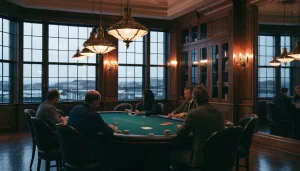 Casino in Hobart: What to Check Before You VisitFind out how live poker differs from pokies, what to verify about tables and tournaments, and how lodging, dining and other visit…
This is not a minor distinction in travel writing. A casino may be the reason for choosing a destination, while the hotel is the practical decision that determines where the traveller sleeps and what the booking costs. Blurring the two makes the venue appear more settled than it is and the accommodation more certain than it may be. The honest description keeps them separate until a specific connection is established.
A casino stay is not a mood created by a headline. It is a named place, a room that can be described, and an offer whose terms can be read. Until those elements are clear, the phrase remains an expectation—not an itinerary.
Poker-room and tournament searches point to a more specific question than a general casino search: not merely whether poker is associated with a venue, but whether there is a dedicated place to play or a scheduled competition. Those are separate claims. A casino’s existence would not, by itself, establish either one.
The distinction matters because “poker” can describe several different things. A room may mean a permanent area for cash games, a space used occasionally for organised play, or simply a label in a venue description. A tournament, meanwhile, is an event with its own format and schedule. The words are not interchangeable, and neither amounts to a confirmed local offering on its own.
Attention: A headline is not a schedule; tournament details require a confirmed organiser, venue, date, and format to be considered credible.
Tournament details are particularly time-sensitive. A credible event notice would need to identify the organiser and venue, give the date, explain the format and state how entry works. Without those particulars, a mention of poker tournaments cannot tell prospective players whether an event is current, where it is held or what kind of play it involves. A headline is not a schedule.
The same care applies to the idea of a poker room. A permanent room and a temporary tournament setting imply different facilities and arrangements. Neither should be inferred from a broad description of casino entertainment. Even a phrase suggesting poker at a Tasmanian casino would need to be tied to a named venue and a clear, current description before it could support a practical decision.
There is a small but telling difference between the promise of a game and its actual organisation. Poker depends on people gathering under rules: seats, entry conditions, a format and an agreed way of running play. These are not decorative details. They define what the event is. In their absence, “poker” remains a category rather than a usable itinerary.
That distinction also keeps land-based poker separate from online play. The two may share a game name, but they are not the same service or setting. Australia’s legal treatment of online casino games is a separate matter; it does not establish that a physical Tasmanian venue operates a poker room or hosts tournaments. The boundary between a building and a digital service is worth keeping intact.
 Best Pokies in Tasmania: Venue Hours and AccessLearn why a venue’s general trading hours may not confirm machine access, and why current, venue-specific checks matter before visiting.
 Instant Payout Online Casinos in Australia: The FactsLearn what instant-payout claims mean, how verification and bonus terms affect withdrawals, and why no Australian online casino licence has been issued.
For anyone comparing claims about local poker, the useful evidence is concrete rather than atmospheric: a venue’s own current announcement, a dated tournament calendar, or published room information that specifies what is actually offered. Old event listings can linger after a schedule changes; generic descriptions can make an occasional event sound permanent. Poker is organised play, not a mood.
Searches that combine casino rooms with poker may also leave the word “rooms” doing too much work. In one context it can suggest accommodation; in another, a dedicated gaming area. Here the relevant question is the latter, and it cannot be settled by language that could refer to either. The phrasing may be brief. The distinction is not.
A cautious account of poker in Tasmania therefore avoids turning an association into an announcement. It does not assign a room, tournament series, date or playing format to a venue unless those particulars are stated by an identifiable organiser. For a game built around rules, that is a modest standard. It is also the only useful one.
A land-based casino and an online casino are not interchangeable versions of the same service. The first is a physical venue; the second is an interactive gambling service, governed in Australia by a different legal framework. The distinction matters when a Tasmanian place name is attached to an online offer: the wording alone does not establish that a local online casino exists.
The Interactive Gambling Act 2001 prohibits operators from providing real-money online casino games to people physically located in Australia. That restriction covers pokies as well as table games such as blackjack and roulette. An Australian-run operator cannot lawfully offer those services to customers in Australia. The law draws its line around the service and where it is supplied, not around the language used to describe it.
Legal Restriction
The Interactive Gambling Act 2001 prohibits operators from providing real-money online casino games to people physically located in Australia.
Offshore platforms sit outside Australian regulation, even when they accept Australian players. Their use by players is not itself illegal, but that does not make the platform a locally licensed or protected service. The distinction is easy to flatten in casual conversation: a site may be accessible, yet remain beyond the domestic system of regulation and oversight. Access is not endorsement.
Nor does an online lobby necessarily show every game a platform offers elsewhere. Operators and software providers can restrict games by a player’s country of origin. One method uses the player’s IP address to estimate geographic location; access from an Australian IP address can therefore mean that region-blocked games do not appear in the lobby. A game that is absent may be restricted by location, rather than evidence of a Tasmanian catalogue or a separate local service.
That boundary also explains why searches combining Tasmania with online casino games can produce an impression of a local offering without establishing one. A location in a page title, a game list, or an advertising phrase is not proof of an Australian operator authorised to provide online casino games there. The law is less impressionable than a search box.
A physical casino search can concern a visit to a venue; an online casino search concerns a service that Australian law bars operators from providing to people in the country. Those questions should not be merged. Neither a reference to Tasmania nor the presence of familiar pokies names changes the legal status of an offshore platform or confirms that a Tasmanian online casino exists.
 Adelaide Casino: Hotel, Poker and Venue GuideLearn how hotel bookings relate to Adelaide Casino, plus what the page covers on poker, parking, dining, nearby stays and practical venue…
 Pokies in Adelaide: hours, venues and legal limitsLearn why Adelaide has no shared gaming-room opening time, how venue claims are assessed, and where Australian online-pokies rules apply.
Regional restrictions can also change over time, as providers and operators apply their own rules alongside legal requirements. A game visible in one country may be unavailable from another, and the lobby can reflect that location-based decision. For Australian players, the practical result is that an offshore site may not display every title it advertises internationally. A name on a general catalogue is no guarantee of access from Australia.
The useful distinction is therefore not between one Tasmanian online casino and another, but between a physical venue and an online service subject to Australia’s prohibition. Offshore sites are not regulated under Australian law, and a Tasmanian label does not turn them into local operators. A familiar name is not a local licence.
A stay described as “near a casino” depends on more than the word *near*. It needs a named venue, a usable address and a clear account of how the accommodation relates to it. Without those anchors, distance is not a comparison: one listing might mean a short walk, another a drive across town. The phrase can sound precise while leaving the central practical question unanswered.
The same care applies to package claims. A casino accommodation deal should identify the hotel and explain what the price includes. A room advertised alongside gaming may be an ordinary stay, a third-party promotion or a package with conditions that change its value. A headline alone cannot settle which.
That distinction matters because travel costs gather quietly around the room rate. Transport, parking, meals and the timing of a stay can alter the total, even where an advertised price appears attractive. A claim of convenience also needs a real route: proximity on a map does not establish a simple journey, accessible parking or a practical late-night return. These are not decorative details. They determine what the arrangement actually asks of a visitor.
Parking near a casino is especially difficult to assess in isolation. The relevant question is not merely whether parking exists somewhere nearby, but whether a particular property offers it, whether access is straightforward and whether any charge or restriction applies. Without a named place to connect those details to, “parking included” or “close to the casino” remains too loose to guide a booking.
Accommodation pages can also blur the line between a casino’s own offer and a hotel’s independent promotion. A package may use casino language for atmosphere while providing no gaming-related inclusion at all. Conversely, a genuine offer may come with dates, booking rules or exclusions that matter more than its headline. The label is not the arrangement.
Tasmania’s casino-related searches may bring together lodging, location, promotions and gaming facilities as if they formed one settled itinerary. They do not automatically do so. A casino’s presence in a destination would not, by itself, establish that nearby accommodation is affiliated with it, that rooms are bundled with gaming, or that a particular property offers a special rate. Nor does a broad reference to gaming machines confirm what a hotel package contains.
 Best casino in Brisbane: what can be verifiedSeparate Brisbane casino accommodation from nearby hotels and online access, with checks on poker, pokies, dining, rewards and details the article cannot…
 Best Pokies in Brisbane: Hours and Venue ChecksLearn how venue opening hours differ from gaming-room availability, what local searches can establish, and the stated RGO requirement for venues with…
For a comparison to mean anything, each offer would need to stand on its own particulars: the property, the location, the dates, the total price and the conditions. Those details should be read as a single proposition, not inferred from a casino-themed heading. A careful comparison sometimes begins by refusing the attractive arithmetic.
A casino name is the beginning of a contact listing, not a substitute for one. A telephone number needs to belong to a named operator; a map pin needs an address that can be matched to a real entrance. Without that connection, a number or location marker is merely a fragment, and a visitor cannot tell whether it concerns a casino, another business or an outdated listing.
A casino bar is not just a generic amenity. Its existence, location within a property, service arrangements and current availability all depend on the operator and the premises. A phrase such as “casino bar in Tasmania” does not establish that any particular bar is open, or even that a named casino has one. The same caution applies to practical details such as parking: without a confirmed site, there is no car park to locate, describe or connect to an entrance.
These distinctions can sound fussy until a journey is planned around them. A map can make an uncertain listing feel settled; a phone number can look authoritative simply because it is formatted like one. Neither presentation supplies the missing link between a real place and the service attributed to it. Plainly put, a pin is not proof.
A map pin or a formatted phone number does not prove a connection between a real place and a specific service; they are fragments, not verified listings.
Baccarat and craps are recognisable casino games, but their names alone do not identify a Tasmanian table, schedule or venue. Availability is a property-specific matter, not something that can be inferred from a broad regional label. The same goes for concerts: an event listing should identify who is hosting it, where it takes place and when. Without those particulars, there is no reliable programme to describe.
This is why a useful venue notice is more than a collection of appealing nouns. It joins a named operator to a physical location, then connects that location to current services and events. Otherwise, “bar”, “concert” and “car park” float free of any place a visitor can actually verify.
Tasmania’s casino-related searches bring together questions that ordinarily belong on a venue’s own contact page: how to reach the property, where to find it, whether it has a bar or parking, and what entertainment is scheduled. Those are sensible things to establish before setting out. But a regional search phrase cannot supply an operator’s identity, and a plausible-sounding detail should not be mistaken for a confirmed one.
A dependable listing would make the connection explicit: venue name, address, contact channel and any current event information, all tied to the same operator. The useful answer is not a borrowed number or a guessed location, but a clear distinction between a search label and a verifiable destination.
Breakfast, a buffet, employment and a rewards scheme belong to different parts of a casino’s public life. Their appearance together in a search for a Tasmanian casino does not make them one package. Each points to a separate question: whether a venue serves food at that time, whether it offers a buffet format, whether it is recruiting, and whether it operates a loyalty programme. The wording of a search can gather those interests around a place without establishing that the place provides any of them.
Breakfast is a time of day; a buffet is a way of serving food. The terms overlap only when a venue actually describes a buffet breakfast. A useful listing would identify the venue and distinguish the meal from other dining options, then give details that can be checked directly, such as service times and any conditions attached to entry. Without a named establishment, “casino resort” remains a broad label rather than a description of a particular Tasmanian property. The word *resort* can suggest a cluster of amenities, but suggestion is not inventory.
A buffet carries its own expectations: a set-up, a range of dishes and a particular way of paying or being served. None should be inferred from the word alone. Nor does a mention of breakfast establish that a buffet is available, or that either service belongs to a casino rather than another nearby business. This is the small but consequential grammar of hospitality: the difference between an attractive category and an actual service.
Employment searches describe another kind of connection to a casino. A job listing should identify the employer, role, location and whether applications are open. Hospitality work may sound like a natural part of a casino’s orbit, but the phrase does not establish that a Tasmanian casino is hiring, what roles exist, or what conditions they carry. A vacancy is not a permanent feature of a venue; it is a time-sensitive offer, and old listings can linger after the work has gone.
Rewards schemes require equally careful reading. The name of a programme, its operator and its terms matter more than the reassuring promise of “rewards.” A genuine scheme would set out how membership works, what activity earns benefits and what restrictions apply. Those details cannot be supplied by the category itself. A search for casino rewards in Tasmania therefore expresses an interest, not a confirmed entitlement.
There is a social story in these searches. Casinos are imagined not only as places to gamble, but as employers, dining destinations and institutions that invite repeat visits through membership. That image borrows from the resort model, where a single address is expected to contain several kinds of leisure and service. It is a persuasive picture. It is not proof.
For anyone assessing a named Tasmanian business, the practical distinction is simple: treat breakfast, buffet service, vacancies and rewards as separate claims, each requiring its own current details from the responsible venue or employer. Until a specific business and its terms are identified, none can be treated as an established feature of a Tasmanian casino. Categories are not commitments.
A venue’s opening hours are more than a practical detail: they define when a place becomes part of a town’s public life. A late closing time, a quiet weekday, or a special event can shape how people travel, work and gather. But those patterns belong to a particular operating venue, not to the word “casino” in isolation.
That leaves searches about whether a casino is open, or has reopened, without a dependable answer. A past announcement would not settle the present: hours and operations can change, and a claim about a current schedule needs a current notice tied to an identifiable venue.
The same distinction matters when development is mentioned. A proposal, construction plan or public discussion is not proof that a casino has opened or resumed operating. Development has stages, and each says something different: an idea signals intention; work on a site signals progress; an operating venue is a separate fact. Confusing them turns the future tense into a misleading present.
Entertainment raises a related problem. A performance calendar, themed night or public event is not an inherent feature of every casino. Such programming belongs to an operator and a date, and can change independently of the venue’s broader status. Without those particulars, there is no sound basis for describing what is on, when it happens, or whether an event is still scheduled.
Employment searches deserve the same care, though they concern a different question. A casino development might be discussed in terms of jobs, but discussion does not establish active recruitment, available roles or the conditions of employment. Those are matters for a named employer and a current vacancy notice. A broad expectation about what a future venue might need is not a job listing.
Even a review can blur these distinctions. A description of an earlier visit may capture a particular moment; it cannot, by itself, establish today’s opening hours, current entertainment or the status of a reopening. Reviews can convey atmosphere, but they are not an operating schedule. Dates matter.
The menu searches that appear alongside these questions point to another practical concern, but food offerings do not answer whether a venue is open or what entertainment it provides. Those details belong to a separate account of dining, and should not be folded into a general description of casino operations.
The phrase “best casino in Tasmania” can sound like a request for a settled ranking. Yet a meaningful comparison of operating hours, entertainment and events would first require identifiable venues and up-to-date information about each. Without that foundation, confident claims about a Tasmanian casino’s schedule or programme would be guesswork dressed as local knowledge.
Small distinction. Big difference.
A restaurant associated with a casino is more than a name beside a pin on a map. The connection depends on a particular venue: its location, who operates it, and whether the restaurant is actually part of the casino rather than simply nearby. Without that identity, there is no sound basis for describing a Tasmanian casino restaurant as a place to visit.
That distinction matters because “near a casino” and “inside a casino” describe different arrangements. A restaurant in the surrounding area might have no business connection with a gaming venue at all. A restaurant within a complex, by contrast, would need to be tied to an identifiable property before its setting could be described. The words overlap in a search box; the facts do not.
Nor can a restaurant name be supplied as though it were established. A name without a reliable location leaves basic questions unanswered: which town it is in, what venue it belongs to, and whether the listing refers to a current business. Those are not decorative details. They determine whether a restaurant exists in the sense that matters to someone planning a visit.
Menus require the same care. A menu is not a permanent feature of a venue, and a dish mentioned somewhere cannot be treated as evidence of a current offering. Without a confirmed restaurant, there is no responsible way to describe its cuisine, pricing, service style or reservations. A polished description would only make uncertainty sound like hospitality.
This is especially important in Tasmania, where a broad phrase such as “casino restaurants” can suggest a choice of venues when no specific restaurant has been established. The plural may be convenient language, not proof of several dining rooms. Search wording has a way of making an idea look like an address.
A credible restaurant profile would connect the name to a physical venue and distinguish the restaurant itself from nearby businesses. It would also make clear whether details such as menus and opening arrangements are current. Without those anchors, claims about dining become guesswork, whether they concern a fine-dining room, a casual restaurant or a particular cuisine.
The phrase “Tasmania casino restaurant” therefore cannot, on its own, identify a place or establish what it serves. That is not a judgement about the quality of any restaurant; it is a limit on what can responsibly be said. A dining recommendation needs a dining room first.
Names matter. So does the door they belong to.
A casino address is more than a point on a map. It identifies the operator, the entrance and the place to which practical details belong. Without a venue name tied to a location, the phrase “casino in Tasmania” cannot establish where a visit would begin. A town, a street address and a building that houses gaming are different claims; treating them as interchangeable turns a broad label into a misleading itinerary.
The same distinction matters when spa services enter the picture. A day spa may be part of a hotel, an independent business or a facility within a larger leisure complex. The word “casino” does not, by itself, establish any of those arrangements. Nor does it reveal whether treatments are offered, who operates them or whether access is connected to accommodation. Those are details of a particular property, not qualities that can be assigned to a whole state.
There is a quiet social history in the way such searches gather facilities under one imagined roof. Casinos are often pictured as complete destinations: gaming, dining, rest and personal care folded into a single address. That picture is persuasive because modern leisure is sold as a seamless experience. But a search for a spa near casino premises is not evidence that the premises contain one. The distinction is less glamorous than the brochure version. It is also the useful one.
Dress codes belong to the same property-level category. Expectations can depend on the venue, the area being visited and the occasion. A general rule for “Tasmania casino dress code” would therefore imply a single establishment and a single policy, neither of which follows from the wording alone. Smart clothing, casual clothing or restrictions on particular items should not be presented as a Tasmanian standard without an identified venue’s current terms.
Careers information also relies on a named employer. A vacancy, application route or workplace policy cannot be attached reliably to an unnamed property. That is not a small administrative detail: job listings are time-sensitive, and the organisation receiving an application matters as much as the role itself.
For anyone assembling a practical picture of a casino visit, the order is straightforward: identify the operator and address first, then check that property’s facilities and visitor policies. A spa, a dress code and a job listing are not interchangeable clues to a venue’s identity. They are separate details, each requiring a real place behind it. A name before a day plan.
A casino label describes a gambling venue, not a complete leisure complex. Food service and swimming facilities are separate parts of a property’s offer, and neither follows automatically from the word “casino”. That distinction matters in Tasmania, where a plan built around a meal, a food court or a pool depends on the identity and facilities of a particular venue.
A food court suggests several food options gathered in one place; it is not interchangeable with a restaurant, café or a single counter. The categories tell different stories about how a venue is organised, but the name alone cannot establish which arrangement exists. Nor does a casino’s presence imply that food is served on site, at particular times or in any particular format.
A pool is an even clearer example of an amenity that belongs to a property profile, not to the definition of a casino. It might be associated with a hotel or wider resort, but that association is not proof that a particular Tasmanian casino has one, or that it is open to all visitors. A photograph of a building, or a general description of a destination, would not settle those practical distinctions.
The careful way to read claims about casino food or a pool is therefore property by property. A named facility, its location and the conditions for using it are what turn an attractive possibility into a usable detail. Without that specificity, “casino food” and “casino pool” remain broad labels rather than dependable descriptions of a visit.
This is not a small distinction. A meal can be planned around a confirmed outlet; time at a pool requires a confirmed facility and access. The casino itself answers neither question. A venue name and current property information are the necessary starting point, before either amenity is treated as part of a Tasmanian casino experience. Otherwise, an imagined resort can quietly take the place of a real itinerary.
Yes. The Interactive Gambling Act restricts Australian-based operators from offering online casino games such as pokies, blackjack and roulette to people in Australia. Offshore sites may be accessible, but they are not regulated under Australian law, and some block Australian players or games.
It is technically not illegal for Australian players to use offshore online casinos, but those platforms are not regulated under Australian law; Australian-run online casinos cannot offer these games to players in Australia. In NSW, players must be at least 18 to use poker machines, and mandatory pre-commitment systems require them to set a loss limit before playing.
Check the game’s RTP, which is its theoretical payout percentage over a very large number of spins, and remember that each spin is independent. Progressive jackpot games add a share of each bet to a growing jackpot.
Some pokies offer progressive jackpots, free spins and bonus rounds that players can enter by buying the feature for a set amount, usually 50 to 100 times the stake. Free-spin winnings commonly carry wagering requirements before withdrawal.