Opening schedules, gaming-floor access and venue rules can vary, so general listings cannot confirm what is available at a particular place.
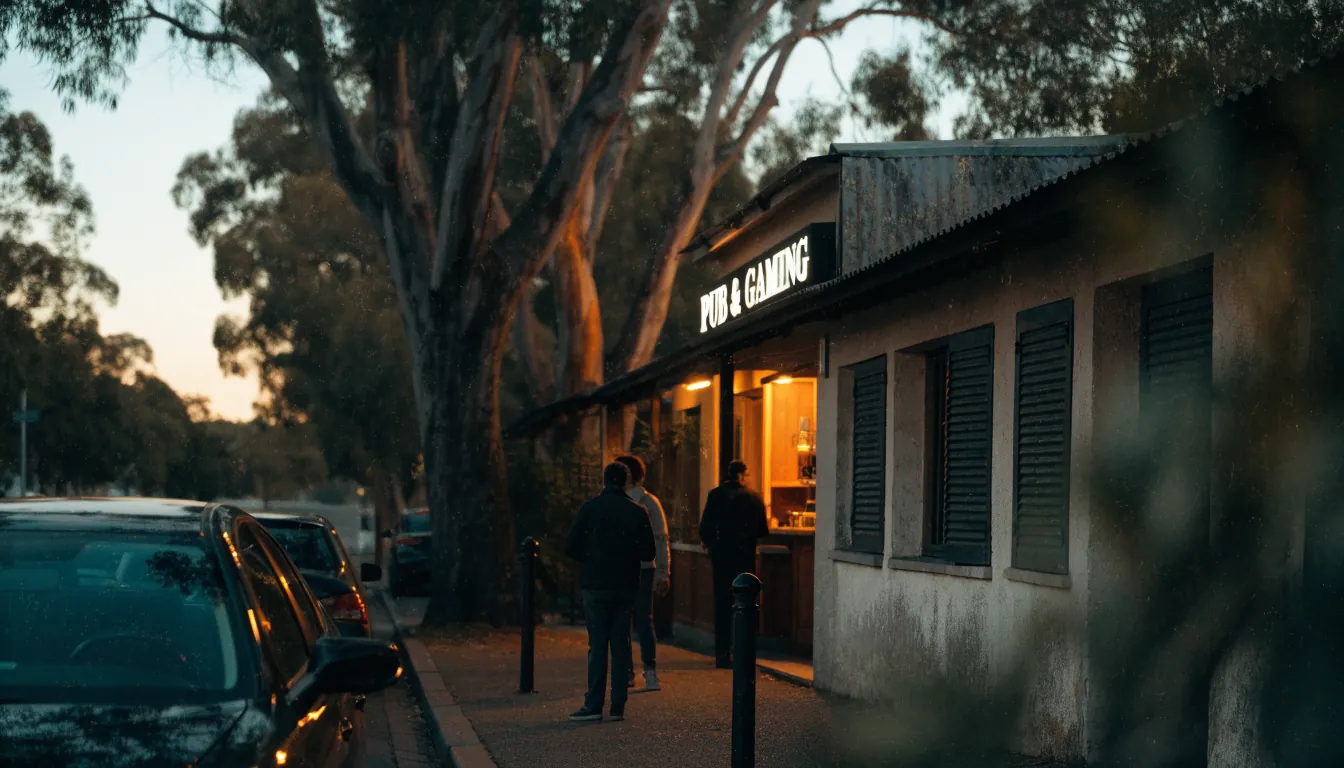
A venue’s opening hours and the hours in which its pokies can be played are not necessarily the same thing. The distinction is easy to miss when a listing reduces a place to a single label: open or closed. A door may be open while part of the venue is unavailable, or a venue’s schedule may differ from what a visitor assumes from its general description. Without a current, venue-specific schedule, a precise answer would be guesswork dressed as a timetable.
That matters for searches about Perth pokies open now, early opening or late-night access. These are practical questions, not signs of a single citywide routine. The useful answer depends on the particular venue and the day in question. A general statement about Perth cannot establish whether a named place is open at a particular moment, and the word “open” alone does not confirm that its gaming area is operating.
Opening times can refer to different things: when a venue admits visitors, when its food or bar service begins, or when the area containing pokies is available. These are related parts of a business, but one does not automatically prove the others. A listing that says a venue is open may describe the premises in broad terms rather than specify the availability of every service inside.
For someone planning a visit, that small distinction carries the whole answer. The relevant detail is not merely whether a building has opened its doors, but whether the intended area is accessible at that time. Published listings can be useful starting points, yet they may not spell out that distinction. A venue’s own current information is more useful for confirming its schedule, particularly when the visit depends on an early start or a late finish.
The same care applies to changes across the week. A schedule shown for one day does not necessarily settle another day’s hours. Public holidays, special events or operational changes may affect a venue’s arrangements, and a general weekly pattern cannot confirm what is happening on a particular date. The sensible unit of information is the individual venue, on the day being considered.
Perth is not one establishment with one set of doors. Each venue sets and communicates its own arrangements. A result that appears to answer whether pokies are open in Perth may therefore be answering a narrower question: whether one particular place is open, according to a listing that may or may not be current. The wider wording does not make the information more comprehensive.
This is why a single opening time should not be carried from one listing to another or treated as a rule for the city. Nor does a venue’s general operating schedule establish when its pokies are available. Those details need to be confirmed separately where the venue distinguishes them. A bare “open now” indicator can be particularly thin: it records a status, not necessarily the conditions that matter to a visitor.
There is also a difference between a schedule and a guarantee of access. A published time describes the venue’s stated arrangements; it cannot by itself account for a temporary closure or a change made after the listing was updated. That is not a reason to distrust every timetable. It is a reason to check that the timetable belongs to the place and date in question.
For early or late access, the practical sequence is simple: identify the venue, check its current opening information, then confirm whether the pokies area is available during those hours. If the listing gives only general venue hours, it has not answered the second part. A direct confirmation from the venue can resolve the gap more reliably than interpreting a broad label.
The phrase “open now” sounds immediate, but its usefulness depends on the freshness and detail of the information behind it. A page may display ordinary hours without reflecting a same-day change. A directory may describe the venue as open while leaving gaming-area arrangements unstated. Neither label should be made to carry more meaning than it contains.
Opening hours also answer only a question of access. They do not tell anyone what the experience inside will be, and they should not be used as a proxy for other claims about a venue. A timetable is a timetable. Nothing more.
For visitors comparing options, the best available detail is therefore the one tied to a specific venue and a specific date, with the gaming area’s availability stated separately where necessary. If those details are not clear, the honest answer is that the schedule still needs confirmation—not that every Perth venue follows the same hours, or that a broad listing settles the matter.
There is no citywide clock for pokies.
A return-to-player figure can look like a neat answer to a messy question: which pokie pays more? It is not. RTP describes a game’s theoretical return across extensive play, rather than a promise about what any individual will receive. It cannot say whether a particular session will end ahead, or when a win might occur.
There is another complication: the figure may not belong to the game in isolation. A specialist review reports that some providers let casinos choose between different RTP settings for the same pokie. That means a familiar title could carry different return percentages in different casino settings. Recognising the game’s name is not enough to establish which setting applies.
A published percentage, where one is available, therefore needs context: which version and setting it refers to, and whether that information is current for the particular casino. Without those details, a figure can create a precision the evidence does not support. A claim that one game is among the best-paying pokies in Perth needs more than a title and a percentage detached from its setting.
 Regional Pokies: Online Casino Topics Across AustraliaExplore regional searches for pokies and casinos, alongside topics such as live dealer games, keno, real-money play and payouts.
 Big Red Pokies Online in Australia: Free PlayLearn how free play differs from real-money gambling, why a demo cannot predict results, and what the Big Red name alone does…
RTP is also a long-run measure, not a timetable. It does not map a sequence of spins or promise that a short session will resemble the theoretical return. In the language of probability, the broader pattern and the individual result are different things. The distinction is less exciting than a jackpot story, but more useful.
Each spin is generated through a Random Number Generator, and its outcome is separate from the one before it. A run of losses does not make a win due; a recent win does not make another less likely on the next spin. The machine has no memory to consult, and a player cannot read a coming result from a sequence already completed.
That independence matters when people describe a pokie as “hot” or “cold”. Such labels may capture the feeling of a session, but they do not establish a change in the game’s underlying odds. A string of outcomes can look meaningful because people are good at finding patterns, especially when money and anticipation are involved. Randomness, inconveniently, can produce runs that look like a story.
The same caution applies to claims about “best” games. A higher theoretical return, if confirmed for the setting in use, would still not guarantee a better result in a single visit. Nor does a result from one player’s session establish how the game will behave for someone else. Each new spin begins without knowledge of the last.
For anyone comparing Perth casino pokies, the sensible distinction is between information about a setting and claims about what a game will pay in practice. A setting may be documented; a future outcome cannot be read from it. A headline percentage can describe one feature of a game, but it cannot turn chance into certainty.
Attention: A higher theoretical return (RTP) does not guarantee a better result in a single visit or forecast an individual session.
This also explains why lists of best pokies in Perth can be less definitive than they sound. Without clear, applicable information about each game’s return setting, the ranking may rest on figures that do not describe the same configuration. Even where settings are comparable, RTP does not identify a guaranteed winner or forecast an individual session. No neat table can do that work.
The numbers can still have a place. They can help describe a theoretical feature, provided the setting is identified and the figure is not mistaken for a personal forecast. But they cannot say which pokie will pay next, whether a losing run is about to end, or how a session in Perth will turn out. That part remains random.
A venue’s safeguards are less visible than its pokies, but they shape the conditions in which play takes place. Deposit and loss limits, session time limits and self-exclusion are established responsible-gambling tools. They work in different ways: a limit can place a boundary around spending or time, while self-exclusion is a request to prevent access to gambling. Their presence on a general list of safeguards does not establish which options a particular Perth venue offers or how they are administered.
The distinction matters because a policy on paper and help available on the floor are not the same thing. A responsible gambling officer (RGO) is a named staff role, intended to give venues a point of contact for gambling-related concerns. A gambling incident register, in turn, is a record of occurrences rather than a machine feature or a public scorecard. Together, those ideas shift attention from the individual player alone to the venue’s own responsibilities.
 Best pokies in Canberra: hours and local checksA venue’s public timetable may differ from its gaming-room schedule. Learn what local listings can—and cannot—confirm about machine access.
 Australian Pokies Online: Laws, Payments and OffersUnderstand why Australia has no licensed online casinos, and how offshore sites relate to PayID, bonuses, withdrawals and identity checks.
A report published by regionriverina.com.au describes a rule under which venues with more than 20 gaming machines must have a dedicated RGO on duty while those machines are operating, with the requirement beginning on 1 July. It also describes a one-month grace period for removing signage and introducing the officers, and a requirement for venues to record relevant incidents in a gambling incident register. Such entries may include situations in which a patron’s behaviour suggests they are at risk of, or experiencing, gambling harm.
That is a report about a specified regulatory change, not evidence that the same threshold or timetable applies to Perth venues. A local venue’s obligations depend on the rules governing it; the existence of a measure reported elsewhere cannot be carried across state lines by habit. Nor does the presence of an officer settle what happens when someone seeks assistance. The useful distinction is between a formal role, a written record and the practical response a venue can provide.
Registers have an institutional purpose. They make incidents legible to management and regulators, rather than leaving every troubling encounter as an isolated exchange between staff and patron. That can matter in a setting designed around continuous play, where distress may be quiet and where a person’s behaviour can change before anyone calls it a problem. Recording an incident does not itself prevent harm. It does, however, create a basis for accountability that a room full of machines cannot provide on its own.
Venues with more than 20 gaming machines are required to have a dedicated Responsible Gambling Officer (RGO) on duty while those machines are operating.
Venue signage is another part of that environment. Directional signs can make movement through a building feel routine, but the placement of gambling-related prompts near payment facilities has particular significance. Signage directing patrons to gaming lounges must be removed if it is within eyeshot of ATMs or EFTPOS terminals; signage directing patrons to ATMs must be removed if it is within eyesight of gaming machines. The point is not decorative. A prompt beside a place to obtain or use money can turn a practical instruction into an invitation at the moment it matters.
For anyone comparing Perth venues, a grand floor, a familiar brand or a reputation among other players cannot stand in for details about safeguards. Machine counts and venue-level performance figures do not reveal how staff respond to signs of harm, whether limits are available, or what process follows an incident. Those are separate questions, and responsible-gambling language should not be mistaken for proof of a particular venue’s practice.
The quieter architecture matters too.
“Nearby” is not a fixed place. For someone arriving by air, it means a destination relative to the airport; for someone already in the centre, it means something reachable from a different starting point. Those searches may look like variations on one Perth outing, but they describe separate practical questions. A venue that seems close on a broad map may be less convenient once the route, access points and actual address are considered.
Airport-area searches can also blur an important distinction: a place being associated with an airport does not establish that it is inside the terminal, on airport grounds or a short walk from arrivals. The words “near the airport” are elastic. They can describe a wide area, and a map pin alone may not show how straightforward the journey is from a particular terminal or pickup point. Without a confirmed venue address, there is no sound basis for naming a destination or estimating the trip.
The CBD presents a different starting point. “Near central Perth” might mean close to a person’s accommodation, workplace, station or other landmark, rather than close to the city centre in the abstract. North Perth is another distinct location reference, not a synonym for the CBD. A search phrase can compress these places together; a journey cannot. The useful measure is the relationship between a confirmed address and the actual point of departure.
That distinction matters when planning a stop around other travel. Airport arrivals involve baggage, transfers and changing plans; a central-city trip may begin on foot or from a local address. These are ordinary differences in movement, but they change what “near” means. Distance on a screen is only one part of the calculation. Access, route and the precise entrance can matter just as much, particularly where a large property or complex has more than one approach.
A sensible location check begins with the venue’s own address, not a broad label such as “Perth” or “airport.” The address can then be compared with the intended starting point using a current map or navigation service. A pin should be checked against the written address and the route displayed; a search result’s general area is not proof that a venue is where the result appears to place it. If the address is unclear or inconsistent, the location remains unclear. No clever workaround fixes that.
Location Verification
Establish the address
Find the exact venue address rather than relying on broad labels like "Perth" or "airport."
Identify the starting point
Determine the real point of departure, such as a specific terminal or CBD landmark.
Assess the route
Compare the address with the starting point using a current map to verify the actual journey.
“Near me” is especially dependent on context. It changes with the device’s location, the map’s settings and the point from which a journey is being considered. It does not identify a particular venue, nor does it establish that a destination is open to the public or that its facilities match what the searcher expects. Location tools can help compare known places; they cannot turn an unconfirmed listing into a verified one.
The same caution applies to unusual place-name combinations. A result may refer to a suburb, a business, a street or somewhere beyond the intended Perth area. Similar wording is not enough to establish that the result is a nearby pokies venue. The address is the anchor; the label is only a clue.
For airport and CBD travel alike, the practical order is simple: establish the exact venue address, identify the real starting point, then assess the route. Until the first step is settled, claims about what is closest—or easiest to reach—remain guesswork.
Crown Perth is a venue-specific subject, not evidence in itself of what can be found on a particular gaming floor. The name may lead to questions about pokies, room layout, opening times and payouts, but those are separate matters. A venue name cannot answer them all.
That distinction matters because a general description of a venue is not the same as a current account of its machines or the terms attached to a particular game. Nor does a reputation, a photograph or an old visitor comment establish what is available now.
The phrase “best pokies room” sounds like a request for a ranking, but a ranking needs a basis. It might mean the range of games, the room’s layout, the comfort of the surroundings or something else entirely. Without comparable, current information about Crown Perth, calling one room the best would turn a preference into a fact. The adjective would do all the work.
The same caution applies to searches for a maximum cash payout. A machine’s possible prize, a venue’s payment process and the rules that apply to a particular game are not interchangeable. A large headline figure, even if attached to a game elsewhere, would not establish the maximum payable at Crown Perth.
This is a small example of how casino language blurs categories. “Pokies at Crown Perth” can refer to the existence of games, the selection on offer, the room in which they sit, or their potential returns. Each claim calls for different evidence. A venue-level statement about machines would need to identify the relevant games; a statement about hours would need to distinguish the venue’s schedule from when machines can be used; a performance claim would need to concern the specific game and its setting. None can safely be inferred from the name alone.
That restraint is not a verdict on the venue. It is a limit on what a description can establish. A search result can make one destination seem like a complete answer, when the underlying questions are still about distinct details. The label is not the floor plan, the timetable or the payout rule.
Crown Perth can therefore be discussed as the venue people have in mind, but not as a verified catalogue of machines or a ranked room. Claims about its gaming floor, hours and performance require Crown-specific, current confirmation before they can be treated as facts. Until then, precise-sounding details would be decoration, not guidance.
The promise of online pokies can look much the same from Perth as from anywhere else: play for real money, perhaps with a bonus attached, without travelling to a venue. But the legal position is not the same as it would be in a market with licensed online casinos. Australia has no domestic online casino licences, and the Interactive Gambling Act 2001 makes it unlawful for companies to provide real-money pokies to people in Australia without one.
That prohibition is directed at the operator, not the individual player. Australians are not criminally liable simply for playing on an offshore site that accepts them. This distinction can be mistaken for a stamp of approval. It is not. The service remains outside Australia’s licensed casino system, and the law does not turn an offshore operator into a locally accountable business merely because its website can be reached.
The consequence is most concrete when money is disputed. If an offshore casino refuses to pay winnings, an Australian player has no legal recourse in Australia against that operator. A screen showing a balance is not the same thing as a locally enforceable claim. A bonus, including a no-deposit offer, does not change the legal status of the provider or create an Australian authority able to make it honour a payout.
The same caution applies to searches for high-limit or maximum-bet play. Those labels describe what a site may advertise, not the strength of any protection behind the offer. Nor does a claim to be among the best-paying pokies in Perth establish that a game will pay a particular player, or that winnings can be recovered if the operator withholds them. Online availability is not local presence.
Before any withdrawal, identity and address documents should be verified in line with the service’s requirements. That is a practical condition of dealing with an offshore operator, not a substitute for Australian oversight. A player may provide documents and still have no Australian legal route if the operator later refuses payment.
BetStop has a similarly important boundary: it applies to Australian-licensed operators and does not bind offshore sites. Since there is no Australian-licensed online casino, BetStop should not be mistaken for a safeguard against offshore casino play. Protection that stops at a national licensing boundary cannot follow a player into a business operating beyond it.
The state’s position is therefore an unusual division of responsibility. The law prohibits companies from supplying the service, while the individual player is not the target of that prohibition; meanwhile, a player who uses an offshore site may find that Australian legal protection does not extend to a payout dispute. Access and protection are not the same thing. The difference matters most when something goes wrong.
“Open 24 hours” sounds like a simple description of a place that never closes. Applied to pokies in Perth, it carries a more specific promise: that a venue can be entered at any hour and that its gaming facilities are available then too. Those are not necessarily the same thing.
A venue's public hours may describe the building or a bar service without confirming that the gaming area is continuously accessible. A round-the-clock claim must apply specifically to the pokies area to be meaningful.
A venue’s public hours do not, by themselves, establish when pokies can be played. Access may depend on the venue’s own schedule and arrangements for its gaming area. A listing that uses a broad label such as “open all day” may describe the building, a bar or another service rather than continuous access to the machines. The wording is compact; the distinction is not.
The phrase also turns an individual venue’s timetable into something that can sound like a citywide feature. Perth is not one venue with one set of doors. A round-the-clock claim needs to belong to a particular place and to apply to the gaming area, not merely to a general description of the business. Without that distinction, “open now” can mean less than it appears to mean.
This matters especially late at night, when ordinary assumptions about business hours become unreliable. A listing can remain visible after hours, and a venue can advertise broad access without clarifying whether every part of it operates continuously. Neither clue, by itself, establishes that pokies are available at that moment. The certainty implied by the label may be stronger than the information behind it.
A Perth venue should therefore be treated as open around the clock only when its own current information clearly confirms both continuous access and the hours of its gaming facilities. If the wording is ambiguous, a direct check with the venue is more useful than inferring machine availability from a general opening-hours label. That is not a question of finding a cleverer phrase. It is a question of what the phrase actually covers.
There is no basis for treating “24-hour pokies” as a general description of Perth venues. The claim stands or falls venue by venue, and only on information that specifies the relevant facilities as well as the doors. An all-night label is not a timetable.
Choosing pokies in Perth is easier when you can check each casino’s available licensing and payment details before deciding where to play. This list gives a concise reference for the operators featured for 2026.
WinSpirit Casino
WinSpirit Casino lists a Curacao eGaming licence, OGL/2024/923/0383, issued through Antillephone N.V. Its minimum deposit is A$30.
Ricky Casino
Ricky Casino lists crypto payouts in under an hour and PayID payouts in 1–3 business days. The minimum deposit is A$20, or A$30 to qualify for the bonus.
Uptown Pokies
Uptown Pokies operates under a Curacao licence and has been operating since 2017. Its minimum deposit is A$20.
Lucky Dreams
Lucky Dreams lists a Curacao licence and accepts POLi deposits from A$20.
JustCasino
JustCasino lists a licence from the Curacao Gaming Control Board.
SkyCrown
SkyCrown lists a Tobique Gaming Commission licence. Its stated payout speeds are around 10–15 minutes for crypto and 1–5 days for fiat; the minimum deposit is A$30.
Roby Casino
Roby Casino lists a Curacao eGaming licence held by Roby Games Ltd.
Golden Pokies
Golden Pokies lists a Curacao licence.
Bizzo Casino
Bizzo Casino lists a Curacao Gaming Control Board licence, with TechSolutions Group N.V. named in the licensing details.
Thor Casino
Thor Casino lists a Curacao licence through Antillephone N.V., with Versus Odds B.V. named in the details. Its minimum deposit is EUR 20.
A search for pokies in Perth’s central business district can mean several different things: a club with gaming machines, a venue within walking distance of offices or public transport, or simply a place that feels less remote than an outer-suburban destination. Those are practical distinctions, not evidence that any particular club has pokies or that its machines are available to visitors.
The word “best” adds another uncertainty. It might mean a preferred atmosphere, a convenient location, a particular game or a belief that one machine pays more. Without reliable venue-level information, those meanings cannot be collapsed into a ranking. A list of CBD clubs would look decisive while leaving the important question unanswered: what, exactly, is being compared?
A machine’s return setting is not a promise about what happens during a visit, and individual spins remain random. Nor does a familiar game name establish that the same return setting applies in every venue. The CBD is a postcode on a map, not a measure of a pokie’s performance.
The self-exclusion part of the search points to a different concern. Self-exclusion is among the recognised responsible-gambling tools, alongside deposit limits, loss limits and session time limits. The existence of that general tool does not establish which process a particular Perth venue uses, how it is requested or what areas it covers. Those details belong to the venue’s own rules and should not be inferred from its location or from the word “club.”
No Legal Recourse
If an offshore casino refuses to pay winnings, Australian players have no legal recourse in Australia against that operator.
BetStop has a narrower scope than its name may suggest: it applies to Australian-licensed operators and does not bind offshore gambling sites. It should not be mistaken for a universal switch that blocks every form of gambling. The distinction matters because online real-money casino services are prohibited for operators in Australia, while the legal treatment of an individual player is different; a local self-exclusion arrangement should not be assumed to reach an offshore account.
Central Perth offers a useful way to frame the search, but not a shortcut around verification. A venue’s address, club status or prominence cannot by itself establish its machine floor, safeguards or suitability. In the end, “best” is not a property of the CBD. It is a claim that needs evidence.
Perth belongs to Western Australia. South Australia is a different state, so information about its venues does not establish what is available in Perth. The distinction can seem obvious on a map and less obvious in a hurried search for somewhere to play: the word “Australia” may identify the country, while the state name determines which local setting is being discussed.
That matters because a national rule and a local venue detail are not the same thing. Australia’s legal age for gambling, including online pokies, is 18. The Australian Communications and Media Authority (ACMA) is the domestic regulator responsible for enforcing the Interactive Gambling Act 2001. Those are national reference points; they do not turn a South Australian venue listing into a Perth one.
Nor does the phrase “pokies in Perth, Australia” identify a particular venue or say anything reliable about its machines, hours or conditions. It locates the subject broadly. State and city names are not decorative additions to a venue description: they tell a reader which place the information concerns. Confusing them can make a precise-looking result practically useless.
The same care applies to legal context. ACMA’s role is national, but a reference to the regulator is not a substitute for confirming that a detail actually concerns Western Australia. A venue’s name, location and operating arrangements need to belong to Perth before they can answer a Perth question. That is a matter of geography before it is a matter of preference.
South Australia may be relevant to someone planning a visit there. It is not a neighbouring label for Perth, nor a shortcut to establishing what a Western Australian venue offers. The map remains stubbornly useful.
Cashless play can mean several different things: a venue may use cards or another system for transactions, while PayID belongs to a separate part of Australia’s payments infrastructure. The two ideas should not be treated as interchangeable. A payment method that moves money between bank accounts does not, by itself, establish how a Perth venue handles play on its machines.
PayID works as an alias for an account on the New Payments Platform (NPP). Instead of entering bank account details, a transfer can be addressed using an email address, mobile number or Australian Business Number. The NPP is available through all major banks, and its transfers use end-to-end encryption. In this arrangement, PayID identifies where a transfer should go; it is not a machine, a venue account or a cashless gaming system.
That distinction matters when a search for cashless pokies in Perth brings together questions about venues and questions about payments. Information about PayID explains how certain bank transfers are addressed. It cannot confirm whether a particular venue accepts cashless payment at its machines, what system it might use, or whether any such facility is available. Those are venue-specific matters.
Nor does the presence of PayID say anything about the fairness of a game or the transparency of its return settings. It is payment infrastructure, not a measure of how a pokie operates. The same applies to searches that combine Perth with another city: a shared payment term does not establish that venues in different places use the same arrangements.
The language of “cashless” can make unlike things sound like one product. Here, one term describes a way to route a bank transfer; the other may describe how a venue handles transactions. They belong to different layers.
Yes, Australians can play on offshore sites that accept them, but offering real-money online pokies to Australian residents without a domestic licence is illegal, and no Australian online casino licences have been issued. Players have no legal recourse in Australia if an offshore casino refuses to pay.
Compare the bonus with its wagering requirement: a $500 bonus at 40x requires $20,000 in bets before winnings can be withdrawn; if the 35x requirement applies to the $500 deposit plus a $500 bonus, it means $35,000 in bets. Requirements above 40x are especially punishing, and free-spin winnings may also be subject to a cash-out cap.
Yes. PayID is treated like any other qualifying deposit method at the recommended sites.