Carrier billing charges a mobile account, while PayID routes a bank payment through Australia’s New Payments Platform; the two are not interchangeable.
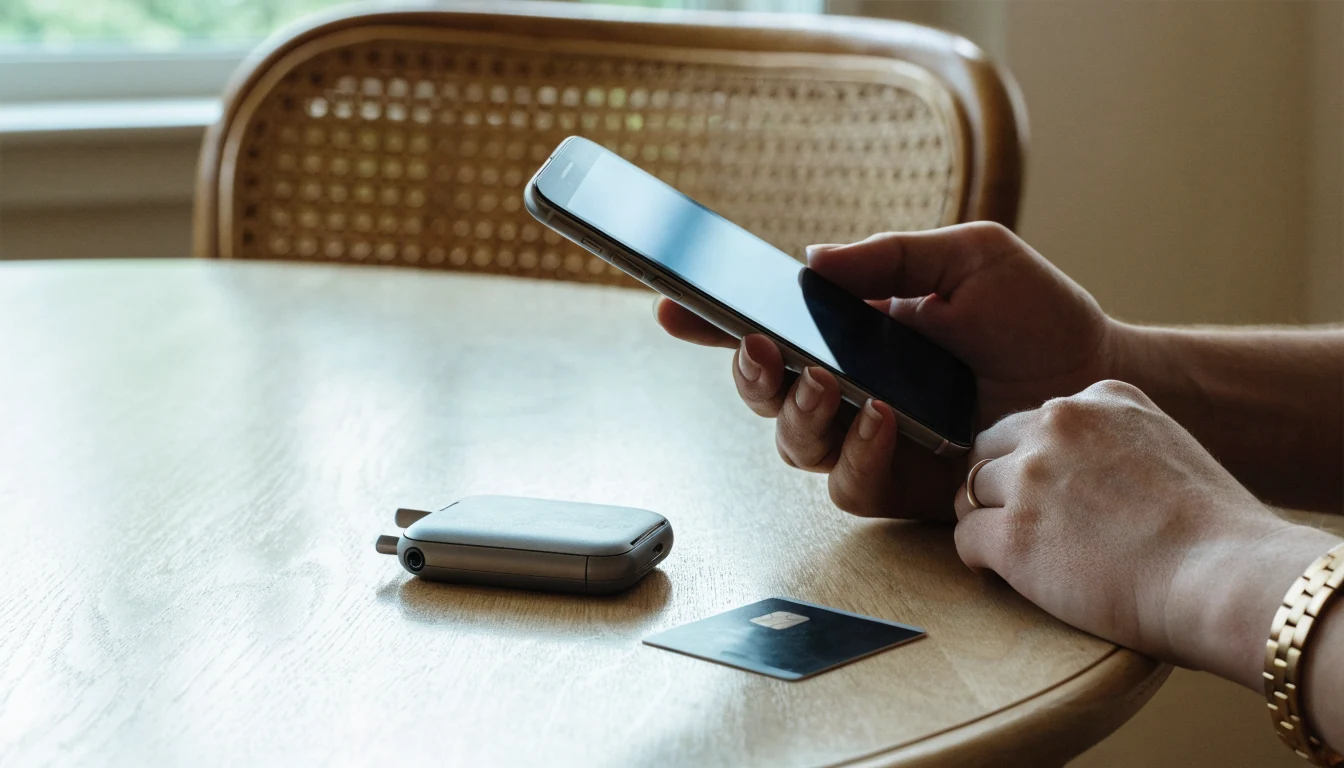
A phone can be the screen, the banking terminal and the object named in a payment address, all at once. That overlap makes “pay by phone” an imprecise phrase. A charge added to a mobile account and a bank payment confirmed on a smartphone may look similar in a short search result. They are different transactions.
Carrier billing means a purchase is charged to a mobile phone account, often appearing on a bill or reducing prepaid credit. PayID works another way. It is a payment service operating through Australia’s New Payments Platform (NPP), where a person can send or receive money using an identifier such as a mobile number or email address. The identifier helps direct a bank payment; it does not turn that payment into a charge from a phone company.
That distinction matters when a search mentions mobile casinos, online slots or games supposedly payable through a phone bill. The presence of a mobile number in the process proves little about the source of the funds. With PayID, a deposit is started by choosing that method, entering an amount and confirming the transaction in a banking app. The money comes through the bank account. The phone is the instrument used to authorise the transfer, not the lender or biller.
Choosing a casino for phone payments involves checking the payment options and the terms that matter to you. This list offers a concise reference to the verified details available for each operator.
WinSpirit Casino
WinSpirit Casino lists a Curacao eGaming licence, OGL/2024/923/0383, issued by Antillephone N.V. Its minimum deposit is A$30.
Ricky Casino
Ricky Casino states that crypto payouts take under an hour, while PayID payouts take 1–3 business days. The minimum deposit is A$20, or A$30 to qualify for the bonus.
Uptown Pokies
Uptown Pokies has operated since 2017 and lists a Curacao licence. Its minimum deposit is A$20.
Lucky Dreams
Lucky Dreams lists a Curacao licence and a minimum deposit of A$20 via POLi.
JustCasino
JustCasino lists a licence from the Curacao Gaming Control Board.
SkyCrown
SkyCrown lists a Tobique Gaming Commission licence. Its stated payout times are around 10–15 minutes for crypto and 1–5 days for fiat; the minimum deposit is A$30.
Roby Casino
Roby Casino lists a Curacao eGaming licence under Roby Games Ltd.
Golden Pokies
Golden Pokies lists a Curacao licence.
Bizzo Casino
Bizzo Casino lists a Curacao Gaming Control Board licence under TechSolutions Group N.V.
Thor Casino
Thor Casino lists a Curacao licence through Antillephone N.V. under Versus Odds B.V. Its minimum deposit is EUR 20.
A handset can therefore be involved without the mobile account being involved at all. The distinction is easy to miss because modern payment systems have collapsed several separate tasks onto one small screen: identifying an account, approving a transfer and displaying a confirmation. Yet the underlying route remains a bank payment. No mobile-bill charge follows simply because the banking app is open on a phone or because the PayID identifier happens to be a mobile number.
The phrase “mobile casino” adds another ambiguity. It can describe a website viewed on a phone, rather than a special category of payment. A screen that adapts to a handset says nothing about whether a payment is billed through a carrier. Nor does a catalogue of pokies or other casino-style games establish what funding methods are used. Software, device and payment rail are separate parts of the arrangement, though advertising often compresses them into a single promise of ease.
There is also a legal boundary that makes this more than a matter of terminology. Under Australia’s Interactive Gambling Act 2001, operators are prohibited from providing real-money online casino games, including slots, to people physically in Australia. That includes casino-style games presented for mobile use. A payment label does not alter the character of the service. Calling a transaction a phone-bill payment, PayID transfer or mobile deposit cannot make a prohibited online casino service lawful.
 Freshbet Payment Methods 2026Section element Freshbet is a hybrid casino product, so its payment set combines conventional fiat rails with cryptocurrency. The listed mix includes…
 Dragon Link Online Pokies in Australia: What to KnowLearn why the Dragon Link name alone cannot confirm a machine or online game's identity or availability, and how to assess listings…
The distinction should also prevent a familiar category error: PayID is not “paying by mobile” in the sense of asking a telecommunications provider to collect the cost later. It is a bank-mediated transfer, and the banking app is where the customer confirms it. A mobile number may be used as the PayID identifier, but that number functions as an address for the payment rather than as an account to charge.
This is why descriptions of a phone-bill casino need close reading. They may be referring to carrier billing, a bank payment made on a phone, or simply a site designed for mobile screens. Those are not interchangeable meanings. In particular, a page mentioning PayID does not establish that a casino can charge a mobile bill. It describes a different payment mechanism.
The terminology has a social history of its own. The phone began as a communications device, then became a wallet, a bank branch and a portable identity check. Language followed the device and blurred the institutions behind it. “On the phone” once described where a conversation happened; now it can describe where a payment is approved. The old phrase survives, while the money takes a different route.
For Australian readers, the practical point is narrow but important: PayID details concern a bank transfer authorised in a banking app, not a payment collected by a mobile carrier. A mobile interface cannot supply evidence that phone-bill billing is available. And where real-money online casino games are concerned, the law is not changed by the device used to reach them.
One screen, different systems.
Legal Prohibition
Under Australia’s Interactive Gambling Act 2001, it is illegal for operators to provide real-money online casino games, including slots, to people physically in Australia.
A deposit described as “pay by phone” can mean two different things. In carrier billing, a charge is added to a mobile account or deducted from prepaid credit. PayID does not work that way: a casino deposit using PayID is arranged through a bank, and the payment reference helps the operator match the incoming money to the right account. A phone may be involved, but that does not make the payment a phone-bill charge.
That distinction matters because a payment label can suggest more than the method actually does. A mobile-friendly deposit process is not necessarily carrier billing, and a search for a casino that takes payments by phone does not establish that such a facility is available. In Australia, the legal position also sets a firm boundary: the Interactive Gambling Act 2001 prohibits operators from providing real-money online casino games, including pokies, to people in the country. A payment method does not alter that rule.
For PayID deposits, the amount and the payment details are separate questions. Casino minimums commonly begin at AUD 10–20. Some casinos accept bank-transfer deposits from AUD 5, but that lower figure belongs to the bank-transfer route and should not be mistaken for a PayID minimum. The displayed minimum can vary by operator and payment option; a general figure is not a promise about a particular account.
The reference is where a small administrative detail can determine whether a deposit is credited automatically. An operator may ask for the player ID or username in the PayID payment reference. If that identifier is missing, the money may arrive without being matched to the account. The deposit can then remain pending until support staff investigate and process it manually.
 New PayID Pokies in Australia: Payment GuideLearn how PayID and the New Payments Platform direct casino payments, why matching bank details matter, and why withdrawals need approval before…
 Casinos That Accept CashToCode in Australia: What to KnowLearn what CashToCode claims can establish, why acceptance and withdrawals need separate proof, and how ACMA enforces Australia's online gambling law.
The payment itself can be correct and still require follow-up. That is the quiet inconvenience of an unmatched reference: the bank has sent funds, but the casino’s records may not know whose balance should change. A reference is not decoration.
Before confirming a transfer, the recipient name should be checked against the details supplied for the payment. The required player ID or username should be entered exactly as instructed, and the reference should be checked before the payment is released. A unique reference in the payment description can also help distinguish one transfer from another. These are simple checks, but they address different failure points: the recipient details identify where the money is going; the reference helps identify whose deposit it is.
A deposit flow may involve selecting PayID, entering an amount, then confirming the transfer in a banking app. That sequence can happen on a mobile device, which helps explain why phone-related wording is sometimes used loosely. Yet the funding source remains the bank account, not the mobile bill. A phone used as the screen is not the same as a phone account used as credit.
The distinction is particularly important when comparing payment methods shown together on a cashier page. A casino may list a mobile-compatible option alongside PayID or bank transfer, but the names and instructions need to be read individually. A method’s presence on a screen does not turn it into another method, and an operator’s payment menu is not evidence that phone-bill billing is supported.
For anyone assessing a payment claim, the useful details are concrete: which method is being used, what minimum applies to that method, what recipient name appears, and what reference the operator requires. Claims about the “best” site or a convenient phone deposit cannot answer those operational questions. Nor can a fast-looking checkout tell whether a transfer will be credited automatically if its reference is incomplete.
PayID deposits commonly start in the AUD 10–20 range, while some bank-transfer options begin at AUD 5. Those figures describe payment thresholds, not an endorsement of any casino or a guarantee that a particular service is available to Australian residents. The more consequential point at the moment of payment is exact identification: the correct recipient, the correct account reference, and a clear understanding of whether the method is bank-initiated or carrier-billed.
A missing identifier may leave a deposit waiting for manual attention; a completed bank transfer does not by itself settle whether the service being paid for is lawful. The two questions belong on separate lines.
The phrase “pay by phone” can describe two very different things. In carrier billing, a purchase is added to a mobile account or deducted from prepaid phone credit. PayID does neither. It is a way to send money from a bank account using an identifier, such as a mobile number or email address. The phone may be involved, but the phone bill is not the source of the funds.
That distinction matters in Australia, where PayID operates through the New Payments Platform (NPP), the banking system’s real-time payment infrastructure. A player starts a PayID payment in a banking app and confirms it there. The mobile number, if used as the PayID identifier, directs the payment; it does not authorise a charge to the customer’s carrier account. A number can be the address for a bank payment without becoming a billing account.
The difference is easy to blur in a mobile-first culture. A handset serves as wallet, identity token, message board and little office; commercial language tends to compress all of that into “pay by phone”. But the payment route still has a source. With PayID, that source is a bank account. With carrier billing, it would be the mobile provider’s billing system or prepaid balance. These are separate mechanisms, with different records and different parties handling the transaction.
For PayID, the sequence is a bank transfer in miniature: the payment is set up through the banking app, then moves across the NPP. Casino deposits made this way are reported to arrive within seconds, commonly in a window of three to fifteen seconds. That timing describes the deposit payment reaching the casino; it should not be mistaken for a promise about any later withdrawal. A real-time payment rail can move money quickly, while a business’s own review and handling remain separate.
Nor does the use of a mobile number as a PayID turn a bank payment into a phone-bill payment. The identifier is a routing shortcut, not a new source of credit. The bank account remains responsible for the funds, and the confirmation takes place in the banking app. A carrier-billed transaction, by contrast, would appear through the mobile provider’s account or prepaid balance. Calling both “phone payments” is convenient shorthand, not a description of how they work.
PayID Timing
Casino deposits made via PayID are reported to arrive within seconds, commonly within a window of three to fifteen seconds.
There is a broader Australian institutional story in that small distinction. PayID belongs to a banking network designed to move funds between accounts in real time; it is not a feature of mobile carriers. The handset is simply where a person may manage the transaction. That is a modest role for a device marketed as the centre of everything. It is still only the interface.
The legal setting should not be obscured by payment terminology. Under the Interactive Gambling Act 2001, it is illegal for operators to provide real-money online casino games, including slots and table games, to people physically in Australia. A payment method does not change the legal character of the service being paid for, and a label such as “mobile casino payment” cannot make a prohibited service lawful.
So a reference to PayID in a casino-payment context means a bank-initiated transfer through the NPP, not an amount added to a mobile bill. That is the precise distinction behind many descriptions of phone-based payments: a phone can help initiate a bank transaction without being the account that pays for it. No carrier charge follows from PayID itself.
A bonus can make a deposit look larger while making the money attached to it harder to withdraw. That distinction is easy to lose in offers presented as a match, a bundle of spins or a welcome credit. The headline gives the value; the conditions determine what that value can become.
 Best Paying Online Pokies in Australia: What to KnowUnderstand why offshore pokies are not locally authorised, how Bitcoin deposits and withdrawals work, and why game credits do not show what…
 Casinos That Accept POLi in Australia: What to KnowLearn why an Australian-facing casino or a general POLi mention does not prove payment availability, and what can be established about deposits…
The same problem sits beneath searches for the best casinos accepting phone payments. A promotional offer does not establish that a casino accepts carrier billing, and a payment route does not establish that a particular bonus is available. PayID, in particular, is a bank-initiated payment service, not a charge added to a mobile account. The words “pay by phone” can blur two separate things: using a phone to make a payment and paying through a carrier bill.
That blur is commercially useful. A phone screen is small, and promotional language often reaches the eye before the terms do. Yet a bonus is not simply extra balance. It is an agreement with conditions, and the details that matter are often the least decorative ones.
Wagering requirements determine how much play is required before bonus funds or related winnings can be withdrawn. A large advertised amount may therefore come with a substantial obligation. The figure on the banner cannot be assessed alone; the requirement attached to it is part of the price.
Maximum bet limits matter for a different reason. A player who exceeds the permitted stake while meeting a wagering requirement may put the offer at risk, depending on its terms. Game weighting also changes the arithmetic: not every game necessarily contributes equally towards the requirement. A balance that appears to move quickly on one game may progress slowly on another.
Time limits add pressure. If an offer must be used or completed within a stated period, its practical value depends on whether the conditions can be met in that window. A cash-out cap matters at the other end: even after the required play, the terms may limit what can be withdrawn from bonus-related winnings.
Determine how much play is required before bonus funds or related winnings can be withdrawn.
Maximum stake limits may put an offer at risk, and not every game contributes equally toward requirements.
Offers must be completed within a stated period, and terms may limit the total amount withdrawable from winnings.
These clauses belong together. Reading only the headline amount is like pricing a ticket without checking where it goes.
A search for a particular slots provider alongside phone payment terms can sound like one combined promise: a named catalogue, a payment method and a bonus, all in one place. They are separate claims. A provider name does not prove that its games are available at a particular operator, that those games qualify for a promotion, or that deposits can be charged to a mobile bill.
Nor does the phrase “deposit bonus” explain which payment methods qualify. Promotion terms may exclude some routes or impose different conditions, so the payment method and the bonus rules need to be considered independently. A familiar name is not a substitute for the offer’s written terms.
Australia’s legal setting makes the distinction more consequential than a matter of marketing precision. Under the Interactive Gambling Act 2001, operators are prohibited from supplying real-money online casino games, including pokies, to people located in Australia. A promotional claim does not change that position.
A careful reading therefore treats the bonus as a contract of conditions, not as money already earned. The headline is the invitation. The small print does the accounting.
“No wagering” sounds like a clean break between a promotion and the money that can be withdrawn. A no-deposit bonus appears cleaner still: nothing paid in, so the label suggests, nothing to wager through. But promotional wording and the conditions for receiving a payout are separate matters. A phrase on a page cannot establish that an offer is available, or that its balance can be cashed out without checks.
That distinction matters particularly in Australia. The Interactive Gambling Act 2001 prohibits operators from providing real-money online casino games to people physically in the country. A promotion described as a no-wagering casino bonus does not alter that legal position. Nor does calling a service a phone-bill casino make a payment route or an offer lawful.
The withdrawal process has its own ordinary paperwork. Specialist reviews report that operators may ask for identity documents before approving a player’s first withdrawal. Completing KYC verification ahead of a withdrawal request can help prevent a document check from becoming an avoidable hold-up. The requirement is administrative, not a wagering condition: a bonus described as wager-free does not, by itself, remove identity checks.
There may also be a connection between how an account was funded and how winnings are returned. Specialist reviews describe operators requiring a withdrawal to go back through the deposit method when that is possible. This is a reported operator practice, not a universal rule. If the original route cannot receive withdrawals, the operator’s stated alternatives and verification process become important; a promotional headline cannot settle either point.
For a person comparing a no-deposit offer with a deposit-linked one, the useful distinction is therefore not simply whether a wagering condition appears. It is whether the offer’s terms explain what can be withdrawn, what checks apply, and which payment method can be used. Those details should be read as conditions, not inferred from the words “no wagering” or “no deposit”.
A cash-out is not a slogan. It is a request that may still pass through identity review and payment-method rules. The label says less than it seems.
A reference to BetStop or Boku does not, by itself, establish how a casino deposit is made. Nor does a claim that a site is “not on” one of those services prove that it accepts phone-bill payments, offers real-money play, or can pay winnings. These are separate claims, and one name cannot stand in for evidence of the others.
That distinction matters because search phrases often bundle several hopes together: a casino billed through a phone account, slots or bingo, perhaps no deposit, and no connection to a particular service. The words may sit beside one another on a page without describing a working payment route. A payment claim needs to say what happens at checkout and where the money comes from; a brand mention is not a receipt.
There is also a legal boundary that promotional language cannot erase. Under Australia’s Interactive Gambling Act 2001, operators cannot provide real-money online casino games, including slots, poker and table games, to people physically located in Australia. A claim involving phone-bill casino play does not change that position. Neither does a statement about BetStop or Boku.
Checking an operator’s stated licence and payout record is a separate form of due diligence, not a substitute for checking whether the service may lawfully be offered in Australia. A foreign licence, if claimed, is not an Australian authorisation. A polished payment page cannot settle that question.
Payout claims need similar care. A payment method can describe how money travels after approval; it cannot prove that a withdrawal request will be approved promptly. A specialist review has attributed some payout delays to an operator’s internal withdrawal checks rather than to the payment rail. That is a possible explanation, not a timetable or a guarantee. The difference is mundane, and consequential.
A page promising a phone-bill deposit should therefore be read for concrete details: the actual payment provider, the account or bill charged, any applicable conditions, and what happens when a withdrawal is requested. A mention of Boku without a clear transaction path leaves the central point unanswered. A statement that a site is not on BetStop answers a different question altogether.
The same caution applies to phrases promising phone-bill-funded slots, bingo, or real-money play without a deposit. Such wording can combine a payment suggestion with an offer claim, while establishing neither. In Australia, the legal restriction on operator-provided real-money online casino games remains the decisive context—not the number of familiar names placed on a page.
A payment label describes a route for money, not a catalogue of games. PayID, for instance, is initiated through a banking app; that fact says nothing about which pokies a service carries, who developed them or whether a particular title is available. The same distinction applies to phone-bill language: a payment claim cannot establish that any game can be charged to a mobile account.
This matters because game names and payment methods are often placed side by side as if one verified the other. They do not. A page might mention slots, bonuses and mobile payments in the same breath, but the presence of those words is not evidence of a playable catalogue or a particular billing arrangement. Nor does a general description of online casino sites establish that a given game is accessible to people in Australia.
Attention: A payment label describes only the route for money; it does not establish the available game catalogue or the legality of the service in Australia.
There is a more consequential boundary here than marketing vocabulary. Under the Interactive Gambling Act 2001, operators cannot provide real-money online casino games to people located in Australia. The prohibition covers slots and other casino-style games, including poker and table games. A payment description cannot alter that legal position, and a list of game titles would not make the service lawful.
The distinction between a game and its payment route is easy to blur because both appear at the moment money is discussed. Yet a deposit method concerns the transfer; a game catalogue concerns what a service offers. Neither proves the other. Even a polished description of mobile play, or an apparent link between a bonus and a slot, should not be treated as evidence that a particular title is available or that phone billing is supported.
Germany in a search phrase does not resolve the Australian question either. Different countries have different rules and payment arrangements; a label borrowed from one place cannot establish what applies to someone physically in another. That is a matter of jurisdiction, not interface design.
The modest conclusion is the useful one: payment facts identify a payment route, not a game, a bonus or permission to provide casino play in Australia. The categories remain separate. Dry, but necessary.
A payment label can travel more easily than the service it describes. A page written for Germany or naming Curaçao may describe a particular operator’s arrangements in that jurisdiction; it does not establish that the same service is available to someone in Australia, or that its payment options work here. The familiar words “mobile” and “phone” do not settle the question either. They may describe a device, a billing route or simply a site’s sales language.
 Bitcoin Pokies in Australia: Laws and PaymentsUnderstand how Australian law treats offshore Bitcoin pokies, how game credits and transfers work, and what can happen when payouts or verification…
 Instant PayID Withdrawal in Australia: What the Speed CoversLearn which part of a PayID withdrawal is instant, how casino approval and bank processing shape payout time, and how PayID compares…
The legal boundary is less elastic. Under Australia’s Interactive Gambling Act 2001, operators may not provide real-money online casino games, including pokies, to people physically in Australia. A foreign licence, an overseas address or a payment button does not alter that rule. Nor does a page’s use of “online slots” establish that the service is lawful to provide locally. The prohibition concerns the service, not the vocabulary used to advertise it.
There is a separate problem with claims about phone payments. A casino page may say that deposits can be made by mobile, but that wording alone does not show whether the charge is placed on a carrier bill, taken from a bank account, or handled through another route. For Australian PayID, the confirmed mechanism is a payment started in a banking app through the New Payments Platform. That is not a phone-bill charge. A local payment description should therefore be read as a claim to check, not as proof that a foreign service has become an Australian one.
The same caution applies to any assertion about an overseas operator’s licence or payout history. Those claims need independent checking, and neither a payment method nor a payment logo establishes them. More importantly, checking a foreign licence cannot turn prohibited real-money casino provision into a locally permitted service.
Geography is not a footnote. It determines which rules govern the offer and whether a payment claim has any relevance to an Australian account. Search language can blend countries, devices and billing methods into one neat phrase. The underlying arrangements remain separate. A translated sales page is still a sales page; it is not evidence of local availability.
“Phone credit” can mean a charge placed on a mobile account, but a debit or credit card payment is a separate transaction, and a bank wire is different again. The labels can blur in casual use; the money does not travel by the same route. A mobile-bill charge is not a card payment simply because both begin on a phone.
That distinction matters in Australia, where the Interactive Gambling Act 2001 prohibits operators from providing real-money online casino games to people physically in the country. Payment terminology does not change that legal position. Nor does a reference to a service used overseas establish that it is available to Australians.
Cards have their own limits as a payment route. Card withdrawals can be slower than deposits or unavailable, depending on the processor. A card logo on a payment page, where one appears, does not establish that withdrawals will return to the same card or follow the same timetable. Deposit and withdrawal routes are not always mirror images.
A bank wire is a conventional transfer requiring the recipient’s business name and bank details: the account number and bank name, and potentially SWIFT, BIC or IBAN codes. Those details identify a bank account, not a mobile subscription. A wire can take as long as seven business days to appear, and its charges may exceed those attached to other non-banking transactions.
The procedure has a distinctly older rhythm: account identifiers, bank codes, and a transfer moving through banking channels rather than being added to a phone bill. It may be arranged online or through a bank, but convenience of initiation does not shorten the time it takes to reach an account.
For searches mentioning European or Irish casinos, or services associated with mobile billing, geography and branding are not proof of an Australian payment route. A payment name can travel across borders more easily than the legal and operational arrangements behind it. Different rails. Different rules.
Free spins and casino credit belong to the language of promotions, not payment methods. A phone-bill charge, a bank transfer and a promotional balance are different things, even when an offer’s wording places them side by side. The label “credit” can sound like money already available; in a casino promotion, its use may instead depend on conditions attached to the offer.
For people physically in Australia, there is a more basic boundary. The Interactive Gambling Act 2001 makes it illegal for operators to provide real-money online casino games, including pokies, to customers in the country. That applies to the games themselves, not merely to how a deposit is made. A promise of free spins does not change the legal character of the service.
Promotional language can also make an offer appear simpler than it is. Where casino bonuses are discussed, the conditions that shape their value include wagering requirements, maximum bet limits, game weighting, time limits and maximum cash-out rules. Those details determine what a bonus balance can do and whether winnings attached to it can be withdrawn. The headline is rarely the whole arrangement.
Phone credit has its own meaning: value supplied through a mobile service. It should not be confused with casino credit, nor treated as proof that a casino deposit can be charged to a phone bill. The distinction is modest in wording and substantial in consequence.
A free-spin label is not a payment route. Nor does promotional language make a prohibited online casino service lawful in Australia. The fine print matters; the legal boundary matters more.
Most major Australian banks allow PayID transactions. Limits vary by bank.
PayID deposits typically arrive within 3 to 15 seconds. The casino may need the player ID or username in the payment reference to credit the deposit automatically.
Yes, PayID can be used for casino withdrawals. Casinos may require identity verification before processing a first withdrawal.
At top-rated PayID casinos, verified withdrawal requests are typically reviewed and approved within 2 to 6 hours. After approval, PayID withdrawals may arrive within minutes to hours.
Some casinos offer PayID withdrawals, with typical minimums of AUD 20–50 and maximums of AUD 5,000–10,000 per transaction.